
By Jim Koenig, CRO Just Video Walls
The Big Screen Is Getting Bigger. Much Bigger.
In 2015, the average television measured approximately 47 inches diagonally. Today, 98-inch televisions are increasingly accessible, and manufacturers are introducing displays up to 115 inches. The message is clear: homeowners have developed an appetite for bigger screens, and that appetite shows little sign of slowing. But what happens when a 100-inch television isn't big enough or won’t fit down the stairs or up an elevator into a high rise?
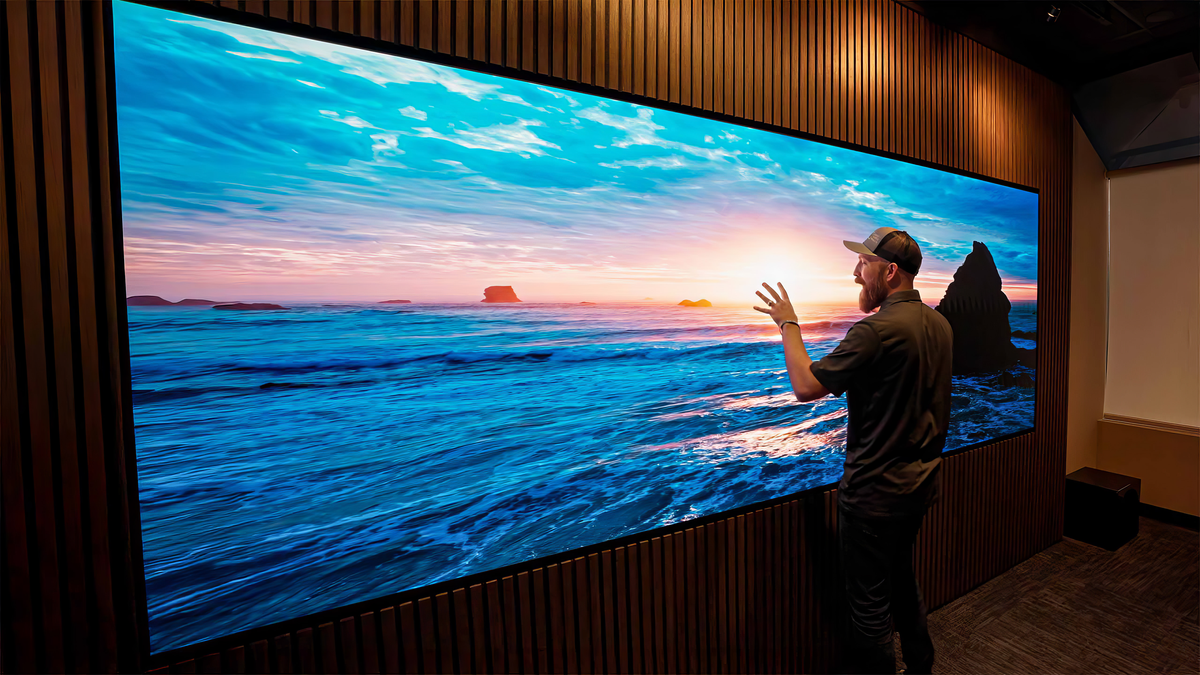
For luxury homeowners, the answer is increasingly found in a technology once reserved for stadiums, commercial venues, and high-end entertainment environments: direct-view LED video walls. These displays introduce a new category of residential entertainment, where size, visual impact, and architectural integration are no longer constrained by the dimensions of a traditional television. For builders, architects, and interior designers, understanding this technology is becoming an important part of designing tomorrow's luxury homes.
Why Homeowners Are Embracing Video Walls
The rise of residential video walls isn't simply about having the biggest screen in the neighborhood. It's about creating experiences that traditional displays cannot easily replicate. Today's luxury homes increasingly feature expansive great rooms, open-concept living areas, dedicated sports lounges, and multipurpose entertainment spaces. These environments bring people together for movie nights, sporting events, and entertaining friends and family.
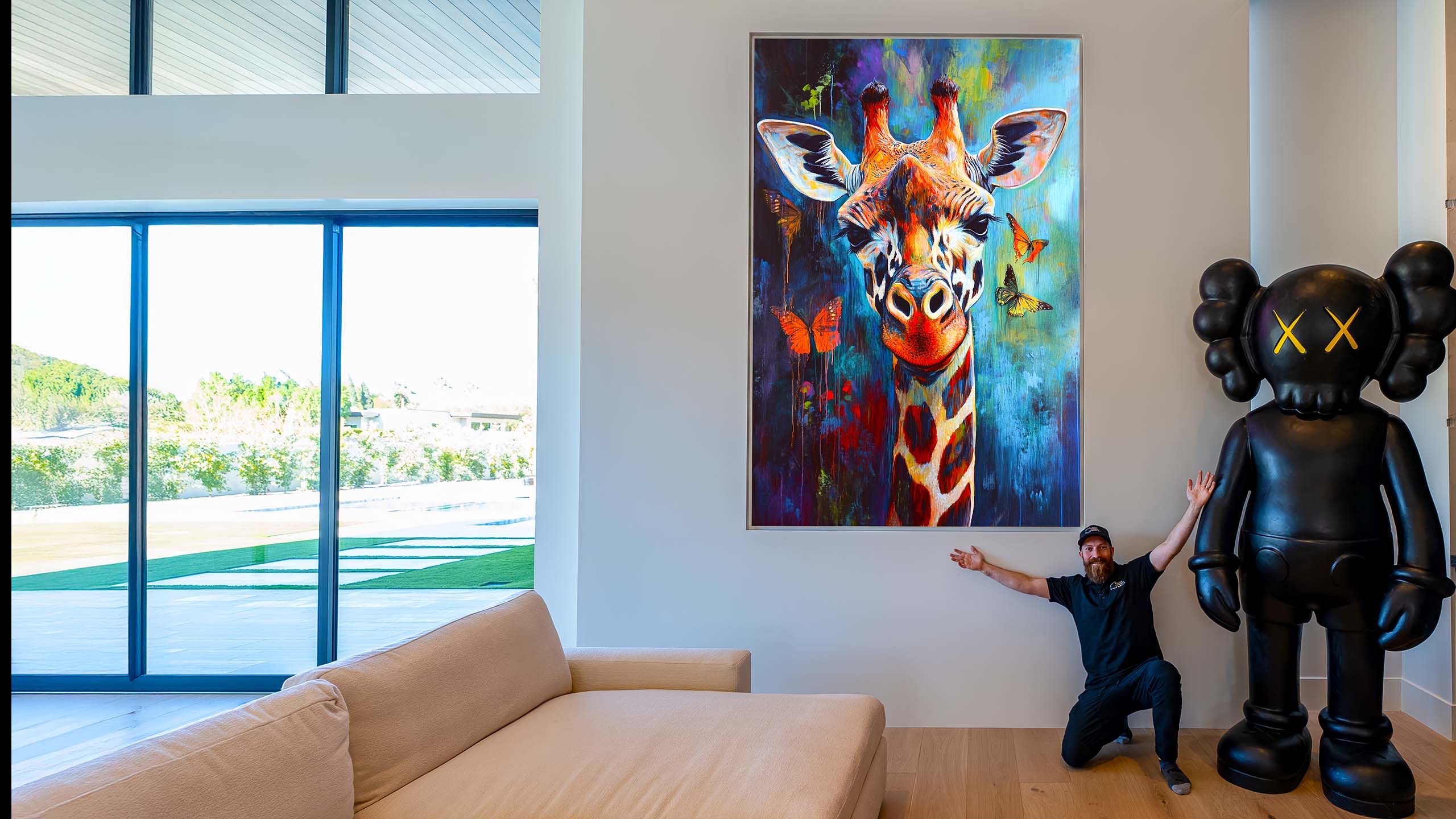 A conventional television can feel undersized in these spaces, particularly with high ceilings, large windows, and longer viewing distances. Imagine watching the Super Bowl on a 162-inch display, enjoying a cinematic experience on a screen that fills an entire wall, or transforming a living space into a digital art gallery. Unlike projection systems, direct-view LED displays produce their own light, delivering vibrant images without requiring a completely darkened room. This makes them attractive for luxury living spaces where natural light and open floor plans are integral to the design.
Constructed from modular LED cabinets that create one continuous, seamless image, video walls can also be configured in sizes and proportions beyond those of conventional televisions. Perhaps the most compelling reason homeowners are embracing video walls has little to do with specifications.
It's the emotional response.
Seeing an extraordinary display in person creates excitement that's difficult to communicate through a brochure. Once homeowners experience what a beautifully integrated video wall can bring to their living space, the conversation shifts from whether they need one to imagining where they could put one, two, or more!
When the Display Becomes Part of the Architecture
For architects and interior designers, video walls introduce a compelling opportunity: treating the display as an architectural element rather than an appliance attached to the wall. Historically, integrating a television meant accommodating a large black rectangle. Even when turned off, that rectangle could dominate an otherwise carefully designed interior.
Video walls offer a different approach. With proper planning, they can be recessed into architectural features, installed flush with surrounding surfaces, and incorporated into custom millwork or other design elements. Increasingly, designers are discovering the possibilities of cloak mode, sometimes called camouflage mode. Instead of leaving a large black display visible when it isn't being used for entertainment, the video wall can display carefully selected imagery, artwork, or photography designed to complement the room.
Imagine a beautiful stone feature wall where the display visually blends into the surrounding material. Or a contemporary living space where the screen transitions from a sporting event to an architectural image that complements the interior finishes. While the display remains physically present and illuminated, the visual effect can be transformative. The technology becomes part of the design rather than competing with it.
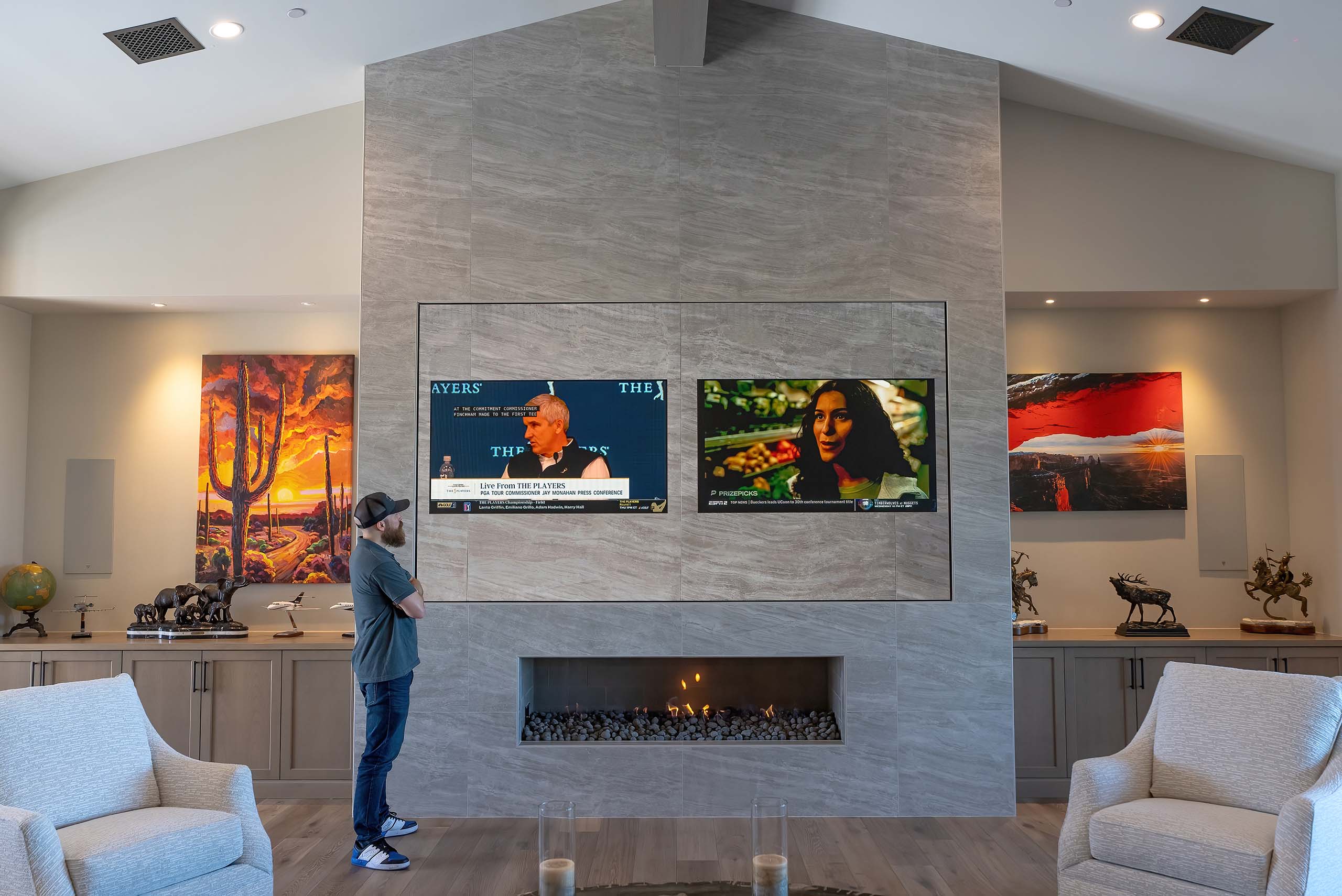 This opens exciting possibilities for designers who have traditionally struggled to reconcile the homeowner's desire for a large display with the aesthetic requirements of a luxury interior. The objective is no longer simply to find a place for the television. It's to consider how a display can enhance the architecture itself.
What Design and Construction Professionals Need to Understand
While residential video walls offer tremendous creative freedom, they introduce requirements that differ significantly from installing a conventional television. The most successful projects begin with collaboration between the builder, architect, interior designer, technology integrator, and video wall manufacturer early in the design process.
Plan for the Display Before Construction Begins
A video wall is a complete engineered system, not simply a screen that hangs on a wall. Structural support, electrical requirements, heat management, ventilation, and service access must all be considered. For flush-mounted or recessed installations, these details become especially important. The display must integrate with the surrounding architecture without compromising performance or long-term serviceability. Making these decisions during architectural planning is far easier than addressing them after construction is complete.
Choose the Right Display for the Environment
Not every video wall is appropriate for every application. Viewing distance, pixel pitch, brightness, room lighting, and intended use all influence product selection. Pixel pitch refers to the spacing between individual LED pixels. Generally, closer viewing distances benefit from finer pixel pitches, but choosing the smallest available pitch doesn't automatically guarantee the best result. Likewise, maximum brightness isn't necessarily better. A display that looks spectacular in a brightly lit showroom may be uncomfortable in a dimly lit residential environment if it isn't properly calibrated or has its brightness set correctly. The goal is to engineer the right display for the space, rather than simply purchasing the product with the most impressive specifications.
Understand That Installation Is Part of the Product
Perhaps the most overlooked aspect of video wall technology is installation quality. A video wall consists of numerous individual components that must be assembled and aligned with exceptional precision to create one uniform image. Small variations in alignment, cabinet flatness, or image calibration can become noticeable across a large display. Unlike a television that arrives as a finished product, a video wall achieves its final appearance during installation and commissioning. This means the skill of the installation team directly affects the finished product. A premium display installed poorly can deliver a disappointing experience, regardless of its specifications.
Why the Manufacturer Behind the Wall Matters
As interest in residential video walls grows, so does the number of companies offering them. To someone unfamiliar with the technology, many products appear remarkably similar. Cabinet dimensions, pixel pitch, brightness ratings, and refresh rates may look nearly identical on competing specification sheets. Price differences, however, can be substantial. The most important specs are never found on a spec sheet. This creates an important question for builders, architects, designers, and technology integrators: Are you purchasing a video wall, or partnering with a company capable of delivering the complete experience?
Much of the world's LED display manufacturing takes place overseas, and manufacturing location alone is not an indication of quality. The more meaningful distinction is the design specification, infrastructure, expertise, and accountability behind the product. Some companies primarily import and distribute equipment. Others invest in domestic engineering, quality control, system commissioning, training, installation expertise, and long-term technical support. Those differences become especially important in luxury residential applications with demanding clients.
Consider achieving a truly flush-mounted video wall, where the display sits precisely within a finished architectural surface. Who is going to produce the drawings for the contractor? This requires coordination between the manufacturer, integrator, builder, and design team. Mounting tolerances, structural considerations, ventilation, service access, and the finished appearance all need to be addressed. Creating a convincing cloak mode experience introduces another layer of collaboration involving display characteristics, image selection, surrounding materials, lighting, and the homeowner's aesthetic expectations.
These challenges aren't solved by shipping cabinets to a jobsite and handing an installer a manual. They require specialized expertise and an understanding of how technology must work within the architecture of a luxury residence. Today, AI can help a startup produce a professional looking website with “case studies” that are in fact, not real. Without internet police on the prowl, how do you know who to trust?
A Different Approach to Residential Video Walls
These challenges are precisely why Just Video Walls was founded. Coming from the professional integration industry, our team recognized that while LED display technology was advancing rapidly, the infrastructure needed to deliver it successfully into luxury homes had not always kept pace.
The residential market needed more than access to display hardware. It needed a manufacturer that understood the entire project, from the earliest design conversation through installation, commissioning, homeowner handoff, and long-term support. Rather than operating simply as an equipment supplier, Just Video Walls was built around providing comprehensive, 360-degree support throughout the project lifecycle.
That includes helping design professionals and integrators select appropriate technology, supporting architectural and engineering coordination, conducting domestic quality control and system pre-commissioning, providing specialized installation expertise, and maintaining U.S.-based technical support after completion. It's an approach built around a simple principle: the manufacturer's responsibility shouldn't end when the product ships.
For a luxury homeowner, the expectation is that everything works beautifully. For the builder, architect, and designer, the expectation is that the technology enhances the finished project rather than creating complications. For the technology integrator, having an experienced manufacturer behind the installation can make the difference between a challenging project and an exceptional one. Ultimately, everyone involved shares the same objective: delivering an experience that meets the homeowner's expectations while protecting the reputation of every professional who helped create it.
The Future Is Bigger Than the Screen
Residential video walls are opening a new chapter in luxury home design. They offer homeowners immersive entertainment experiences, give designers new creative possibilities, and allow architects to incorporate dynamic visual elements into spaces in ways that were previously difficult or impractical. Realizing that potential requires more than choosing a display based on size, specifications, or price.
It requires early planning, thoughtful design, precision installation, and a manufacturer with the expertise and infrastructure to support the entire project. Tthe most successful video wall installations aren't simply the ones with the best picture. They're the ones where technology, architecture, and craftsmanship come together so naturally that the homeowner experiences the result, not the complexity behind it. And that's when a video wall becomes more than a screen. It becomes part of the home.
________________________________________
Contributed by Just Video Walls, a U.S.-based video wall manufacturer specializing in direct-view LED display solutions for luxury residential and commercial environments.






You Might Also Like: