
















It goes without saying that plumbing is planned, electrical is engineered, and HVAC is coordinated early. Everyone understands these systems are essential to how a home functions.
Technology infrastructure deserves the same level of planning. Four out of five Americans say internet services are as important as water or electricity*. Connectivity is now viewed as a utility, and homes must be designed with the same level of planning given to electrical, plumbing, HVAC, and structural systems.
Yet, networking and data cabling are still sometimes treated as flexible…something that can be added later or adjusted during construction. This approach has always been misguided, but it’s even more so in today’s luxury homes, where homeowners expect technology to be planned for and considered, whether they integrate it right away or over time.
Cable Infrastructure, Ready and Waiting
A well-designed home wiring system functions as the home’s nervous system, carrying data, communications, control, audio, video, and security signals with speed and reliability. Like electrical or plumbing systems, it’s foundational infrastructure that supports nearly every connected experience in the home.
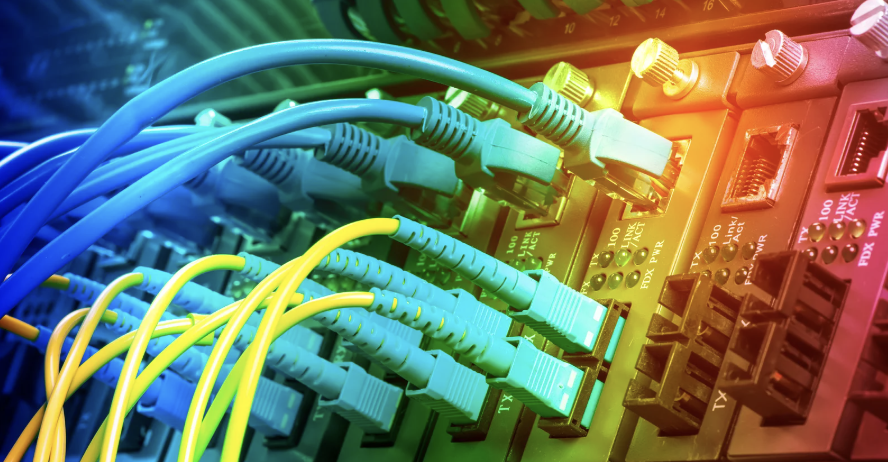
In practice, this infrastructure is typically built around structured Cat6A cabling for data networks and Wi-Fi access points, with RG6 coax sometimes included for legacy video systems. In higher-performance or larger-scale homes, fiber optic cable is increasingly used for backbone links, long runs, or future expansion. Speaker wire and low-voltage control cabling are also commonly included depending on the level of automation and distributed audio design.
Just as homeowners don’t pre-plan every outlet location, they expect electrical wiring to already be in place when needed. The same principle applies to data infrastructure: If clients want technology, the backbone should already exist.
This often translates into multiple Cat6A runs per room, dedicated home runs for televisions and media locations, and pre-installed conduit pathways that allow future systems to be added without invasive construction.
Early planning critical. Once framing is complete, adding cable becomes more disruptive, equipment locations are locked in, and coordination with architectural elements is limited. Outdoor coverage, future upgrades, office needs, and evolving technology are far easier, and more cost-effective, to address during prewire.
For this reason, experienced project teams treat structured cabling and conduit planning as essential early-stage infrastructure, alongside electrical and plumbing rough-ins, to preserve flexibility and future options.
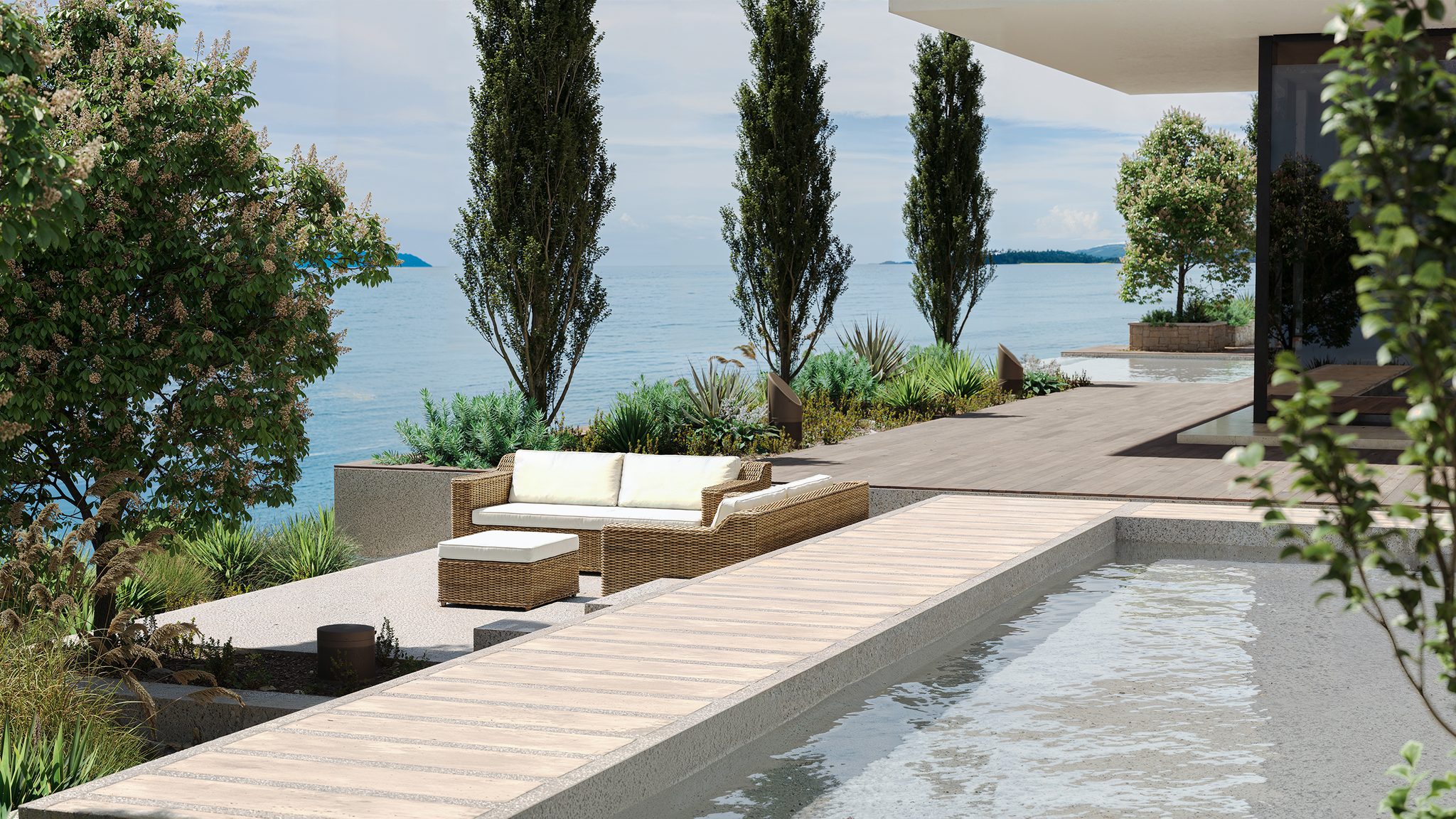
Cabling in the Great Outdoors
Outdoor environments now function as integrated extensions of the home. Pools, terraces, landscape lighting, outdoor entertainment, and security systems require reliable connectivity and thoughtful coordination. It also comes with its own set of considerations. Outdoor network cable needs to be specifically engineered to survive real-world environmental exposure, not just signal transmission. That means a UV-resistant outer jacket for sunlight, moisture protection or water-blocking construction to prevent ingress and internal corrosion, and materials that can handle temperature swings, physical stress, and underground or conduit conditions.
You may need either standard outdoor cable for above-ground runs or more heavily protected direct-burial types with added sealing for soil and water exposure. Just as important is choosing a cable that balances durability with flexibility and manageable diameter, since overly rigid or bulky cable can complicate routing, termination, and long-term reliability.
In practice, these choices typically fall into a few common categories depending on the installation path: outdoor-rated Cat6A for exposed runs, direct-burial gel-filled cable for underground applications where conduit is not used, and conduit-based installations where standard indoor Cat6A is protected inside a physical pathway.
The Wired of Wireless
Structured cabling improves wireless performance by moving bandwidth-heavy systems off the Wi-Fi network. When streaming, surveillance, and entertainment devices are hardwired, they operate more efficiently and leave wireless capacity for devices that actually need it, resulting in stronger, more secure, and more consistent coverage throughout the home.
Hardwired infrastructure also increases system stability and reduces interference compared to relying heavily on wireless connections alone, an advantage that becomes more important in homes supporting remote work, large properties, or multiple simultaneous connected systems.
Even “wireless” systems depend on wiring behind the scenes. Professional-grade and enterprise-grade Wi-Fi access points require Cat6A cabling, typically with PoE (Power over Ethernet). Security cameras perform more reliably when hardwired, and distributed audio and automation systems depend on dedicated low-voltage or network cabling.
The user experience may feel wireless, but performance is built on a wired foundation planned well before move-in.
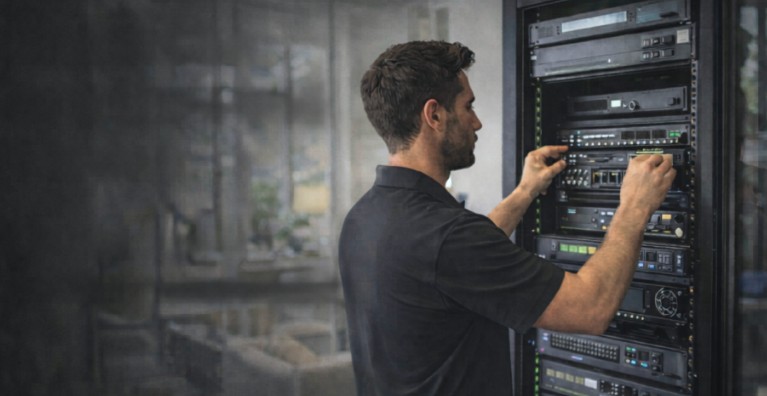 Good Infrastructure Is Designed by Good Integrators
Reliable residential networks are the result of planning and coordination. Wi-Fi access point placement, equipment room design, cooling, power management, and integration with architecture all influence how the home performs. When these systems are designed thoughtfully, technology becomes easier to live with and easier to manage.
That outcome typically reflects early collaboration between architects, builders, designers, and qualified home technology integrators who understand that infrastructure is part of the design process.
Many HTA Certified integrators are contacted by homeowners, builders, architects, and interior designers to ‘clean up’ or replace shoddy or low-quality wiring installed by less-than-professional integrators.
Don’t make that mistake… hire a trusted pro from the jump. You can find one in your area using the HTA Directory here.
*Source: Public Knowledge Broadband Access Study
You Might Also Like: