



















 Proposals for home technology vary wildly because there's no standard scope. Integrators differ in skill, the quality of products they specify, and whether they include real design, engineering, and aftercare. So you're often comparing very different things, not the same job at different prices.
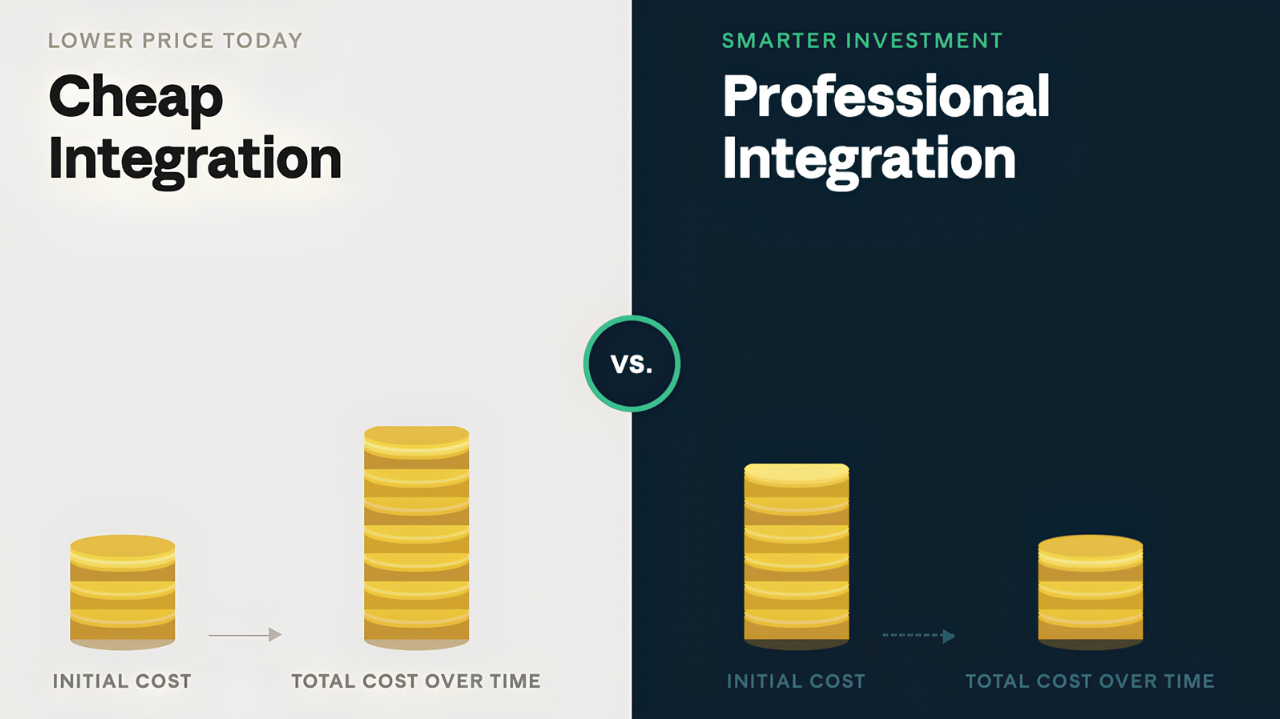
While some firms reduce costs through efficiency and experience, others achieve lower pricing by minimizing design effort, reducing infrastructure requirements, or excluding scope altogether, which later resurfaces as costly change orders. With inexperienced integrators, it’s sometimes a matter of not understanding large-scale projects and what is ultimately required to execute them. What appears to be a bargain at the beginning can ultimately result in a very different deliverable and experience.
The Real Work Behind a Proposal
The level of planning behind the proposal itself is important. Proposals involve system design beyond a quick estimating exercise. In fact, they can represent highly detailed engineering processes that include coordination with architectural drawings, interior layouts, electrical plans, and structural constraints.
This work often results in system design drawings and other documentation that ensure the technology integrates cleanly into the broader project. Because of this level of effort, most experienced integrators treat system design as a distinct professional service. It is not uncommon for detailed design documentation to be billed separately. (Architects and design-build trades understand this need better than anyone.)
When design work is done properly, it reduces ambiguity, improves proposal accuracy, and minimizes coordination conflicts during construction.

Complexity Does Not Scale Linearly
One underappreciated risk involves integrators who take on projects significantly larger or more complex than their typical work. Because they don't fully understand the challenges involved, they often underbid, and the consequences compound from there.
Complexity does not scale linearly with home size. In larger homes, the required systems architecture, network infrastructure, and integration design can become substantially more demanding. Less experienced integrators may specify inadequate or inappropriate components simply because they're unfamiliar with what these projects actually require.
The result: homeowners often end up replacing equipment and investing in costly corrective work when a more experienced integrator is eventually brought in to resolve performance and reliability issues that should never have existed in the first place.
Lower Cost Now, Higher Cost Later
Lower initial proposals are built to close the sale. They can resemble a complete solution while omitting portions of design, coordination, or engineering effort required to fully deliver the system. This will lead to a gradual or drastic shift during construction. As decisions become more defined and site conditions emerge, additional costs are introduced through change orders, scope clarifications, or installation adjustments.
While change orders are a normal part of construction, they should reflect legitimate design evolution or new homeowner desires, not missing scope that should have been defined upfront. Incremental, unstructured adjustments can creep up and account for a significant portion of the final project cost.
Some unscrupulous "AV guys" build business models around low initial pricing followed by change orders during construction, where the initial proposal serves as a lure and is not a complete representation of the total project cost. This is a shady business practice, and it gives the entire home technology industry a bad name.
For architects, designers, and builders, this practice can introduce coordination nightmares on-site as technology systems are adjusted around already completed architectural and interior work.
Service, Support, and the Reality Behind "Free"
Another area that requires careful consideration is ongoing service and support. Some integrators reference long-term support as part of their included offering, often implying it is included indefinitely.
In reputable firms' service models, however, ongoing support is usually delivered via structured service agreements. Sustainable support requires staffing, technical expertise, and availability, all of which carry ongoing operational costs. Does your prospective integrator have their service policies in writing? If a company is promising free support indefinitely, be wary.
A Tool to Calculate System Costs
Many architects, builders, and designers use HTA's Budget Calculator to get a rough idea of technology systems costs from the outset. There are many variables to consider, such as the types of systems (lighting, shading, security, networks, audio/video, media room, etc.), hardwired or wireless options, performance level, and the size of the home or estate.
The brand-agnostic budget calculator walks you through it in about five minutes, so you're knowledgeable before you talk to the homeowner or hire an integrator. It also gives you a measuring stick. If your prospective integrator comes in well below the costs outlined in the HTA Budget Calculator, it could be a red flag.
Looking Beyond Cost
In the end, the proposal represents the most visible layer of how a firm operates, but it is just the tip of the iceberg. The real differentiators often appear in how a firm manages projects once work begins: client communication, handoff from sales to the project team, coordination with trades, responsiveness during construction, and the ability to adapt without disrupting design intent. Project management, collaboration, performance, and service are where long-term relationships between you, the integrator, and the client are won.
Find an HTA Certified Home Technology Integrator
The Home Technology Association’s mission is to help homeowners and home design & building professionals find the most qualified home technology installation firms for their home construction projects. To find an HTA Certified integrator near you, visit our directory.
You Might Also Like: