



















Slab foundations, hail season, attic heat, and a power grid that runs on its own change when the technology decisions have to be made.
In Dallas, most of what determines how a home technology system performs is settled before anyone in the household has talked about technology. Concrete gets poured early in a North Texas build, and anything not sleeved under that slab stays unavailable for the life of the house. There is no basement to run cable through later, and the attic reaches temperatures no equipment should live in.
Which home technology installation firm you hire matters. But when you bring them into the project can matter even more. The rest of this guide follows a Dallas project in the order these critical decisions typically arise.
The Slab Decides What Is Possible
Before the pour, your home technology integration firm should be marking conduit sleeves for everything that will eventually sit away from the house. Pool equipment, gates, detached casitas and shops, landscape lighting and audio, driveway cameras, and future electric vehicle charging all need a path, and the window to give them one closes with the concrete.
North Texas soil complicates that further. The expansive clay across the Blackland Prairie swells and shrinks with moisture, foundations move seasonally, and in-ground runs need slack and properly detailed transitions where they enter the structure. A rigid conduit run tied hard to a moving slab is a failure waiting for a dry August.
Ask any integrator you are considering at what point in the construction schedule they expect to be involved. An answer of "rough-in" means they plan around the slab rather than through it, and the house will carry that limitation permanently.

No Basement, and the Attic Is Not a Closet
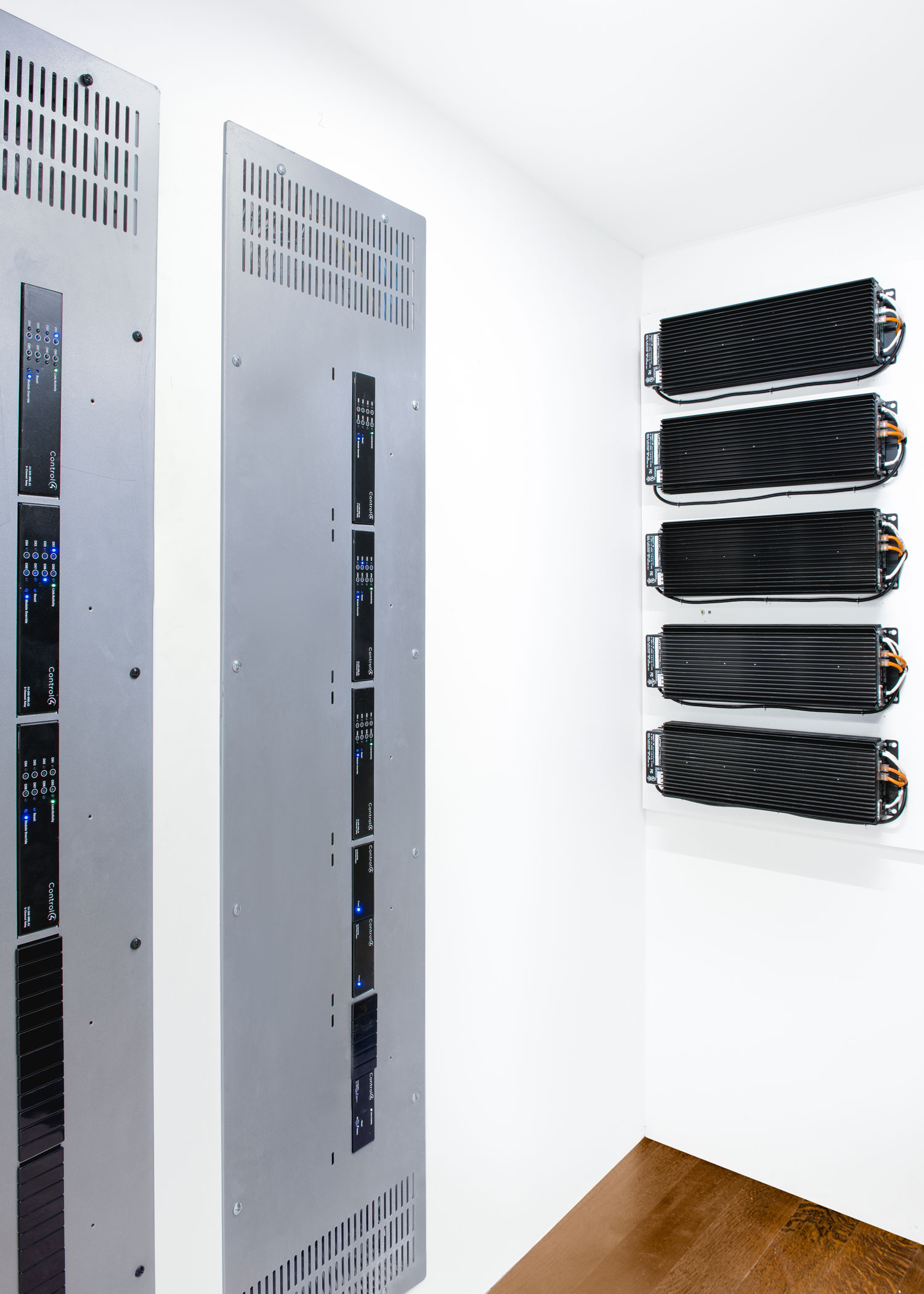 Dallas attics routinely run past 140 degrees in summer. Amplifiers, network switches, and video distribution equipment installed up there run hot, throttle, and fail years early, and the service call to diagnose it happens in the same heat.
Good design in this market puts the equipment rack in conditioned, ventilated space with airflow calculated for the actual load. Cable that does have to cross the attic should be rated for the temperature it will see and supported off the insulation rather than buried in it.
Ask where the equipment will live and how it will be cooled. An attic with an exhaust fan is not an answer.
Hail Season Runs the Outside of the House
North Texas sits in one of the most active hail corridors in the country, and DFW absorbs some of the most expensive hail events in the United States on a regular cycle. Anything mounted where hail can reach it is consumable. Cameras, outdoor speakers, antennas, and landscape fixtures all benefit from placement under eaves and soffits, impact-resistant housings, and mounting details that avoid new roof penetrations that later become leaks.

Heat and sun do the slower damage. Direct western exposure degrades cable jackets, gaskets, and plastic housings faster than most manufacturers' warranties account for, and outdoor video displays need real brightness and thermal headroom to stay usable on a July afternoon. The temperature swing is its own stress. A system here has to tolerate 105 degree weeks and hard freezes in the same twelve months.
Texas Runs Its Own Power Grid
Most of Texas operates on a power grid managed within the state rather than tied deeply into the larger national interconnections, and households here have sat through conservation appeals and load shed in both summer and winter. Power resilience is a design input in Dallas rather than a luxury item.
 The questions are specific. When utility power drops, do the technology systems integrate with a standby generator and any battery storage so the network, security, cameras, and climate control stay online in a defined priority order? During a freeze, do the technology systems monitor interior and pipe temperatures and shut off water automatically when a line is at risk? If internet service fails, does monitoring fall back to cellular?
Standby generators bring their own coordination. Placement, sound, gas supply, and setbacks all involve the electrician, the builder, and in many neighborhoods an architectural review committee, and all of it goes faster when the technology integrator is in those conversations early.
Builder Packages Are a Starting Point
Dallas has one of the deepest benches of luxury custom builders in the country, and most will carry a technology allowance or bring in their preferred low-voltage subcontractor as part of the build. That's a reasonable starting point. But an allowance is a budget number, not a design, and it's usually set before anyone has mapped how the home will actually be lived in. Owners of high-end custom homes regularly discover at move-in that the infrastructure was run to a standard spec: Wi-Fi dead zones across the outdoor living areas, a media room without the wiring for the system they wanted, lighting and shades that can't work together, and an equipment rack squeezed into an unventilated closet.
A distinction worth understanding is between a generic prewire package and a well thought out prewire design. A design accounts for where the router lives, how many Wi-Fi access points the structure needs and where they go based on framing and masonry rather than floor plan symmetry, how much power the equipment rack will draw, and which conduit gets pulled now so the house can accommodate future upgrades. Ask for design drawings. A high-quality technology integration firm will be able to produce detailed design drawings and coordinate the home's technology needs with the electrician, HVAC contractor, and other related trades.
The Metroplex Is Larger Than It Looks
 A company based in Frisco taking a project in Rockwall is an hour of windshield time each way in traffic, and that shows up in service response long after the install is finished. Ask where technicians are actually dispatched from, how many the company has, what the response time is for a service call, and what proactive network monitoring they run so they can proactively handle problems before you call.
Verification is straightforward here. Alarm and security work in Texas is licensed at the state level and can be checked, insurance can be confirmed, and references from projects several years old will tell you more than photos of recent ones. The HTA Certified Integrator Directory shortens that process, since HTA Certification requires independent vetting covering business stability, insurance, references, and project verification.
Questions That Come Up in North Texas
How early should a home technology integrator be involved?
Before the foundation of the house is poured, and at the earliest design conversation if it is a renovation. Ideally a home's technology systems are thought through at the architect's or design-build team's schematic design phase.
Can technology be added to an existing slab home?
Yes. Brick veneer over wood frame gives more options than a poured concrete house does, and most retrofits run attic-down into interior walls, with exterior conduit or wireless covering the rest. Anything below the slab stays out of reach without cutting.
Does my HOA control what technology gets installed outside?
In master-planned communities, frequently. Architectural committees commonly govern generator placement and screening, exterior fixtures, antennas, and surveillance cameras with views into common areas. A qualified home technology integration firm that works in your neighborhood regularly will already know the submittal process.

Getting Ahead of the Schedule
Every market has a version of the job that goes wrong. In Dallas, this can easily happen when the installation is constrained by choices that were already locked when the technology conversation started, whether that was the slab, the equipment location, or a builder package that defined the system before anyone asked what the homeowners really wanted. An integration firm that knows this market will help you plan for technology early, and this avoids costly change orders, project delays, or aesthetic compromises that inevitably happen if the technology conversation happens late.
Starting with HTA Certified integrators is the most reliable way to find firms that work that way.
You Might Also Like: