


















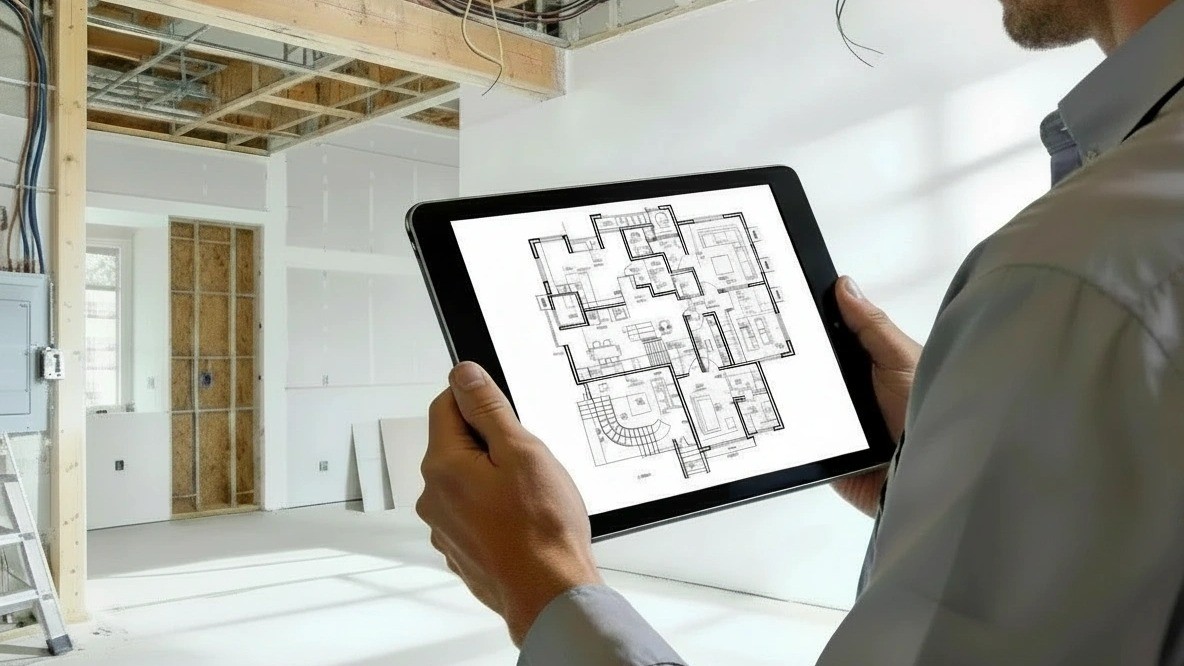
Luxury residential projects run on documentation.
Architects issue drawing sets. Interior designers develop detailed specifications. Structural engineers define assemblies and loads. Builders coordinate execution from structured intent rather than improvisation.
So when technology is introduced into that environment without the same level of documentation discipline, it is a communication gap and a standards mismatch.
In high-end projects, technology systems touch architecture, interiors, lighting, shading, electrical, HVAC, millwork, and landscape. That level of integration requires the same foundational language the rest of the team is already using: coordinated drawings and engineering documentation that define scope before construction begins.
When that documentation is missing or not readily provided, the project shifts away from design-led coordination and toward field-led interpretation. And that is where complexity turns into cost, delay, and compromise.
This is why professional standards bodies, such as the Home Technology Association (HTA), explicitly define engineering documentation as a core requirement for luxury residential integration work. It's part of what qualified technology integrators are expected to offer before installation begins. In other words, design and engineering documentation is a baseline indicator of your integration partner’s competence.
Increasingly, integrators charge for consultation and design. It's the important and time-intensive first phase of services luxury integrators offer (their other two phases are installation and aftercare support).
Whether they charge upfront design fees or not, however, the verdict is the same: If an integrator cannot produce clear, structured documentation early in the design process, they are not participating at the same level as the rest of the design team.
What Proper Integration Documentation Actually Represents
In well-executed projects, documentation is the mechanism that enables technology to coexist with architecture and interiors without conflict.
It defines how systems exist within the built environment before anything is constructed. That includes spatial requirements, infrastructure pathways, and coordination with other trades whose work is equally fixed and precise.
At this level, the most qualified integrators have moved beyond the role of merely installing equipment to become valuable design partners who engineer how technology systems fit into the architecture without disruption. Including:
- Device placement coordinated with architectural intent and reflected ceiling plans
- Equipment room layouts with power, cooling, and service clearances defined
- Low-voltage infrastructure plans aligned with electrical, HVAC, and millwork coordination
- Prewire, blocking, and mounting requirements resolved before framing conflicts occur
- Cross-trade coordination notes that prevent ceiling, wall, and finish conflicts in the field
The practical outcome is fewer assumptions, change orders, project delays, and late-stage design compromises.
More importantly, design documentation ensures that technology decisions are made during design development, when changes are inexpensive, rather than during construction, when they are not.
The HTA Design Partner program clearly defines the HTA’s standards for the types of design and engineering documentation needed for the design and build team, including: the prewire plan, electrical requirements, framing requirements, device placement drawings, equipment rack drawings, Wi-Fi heat maps, cooling requirements, and shade pocket requirements.
Visit the HTA Design Partner page to learn more about these types of drawings.
Documentation capability like this is a key distinction between competent home technology integrators and everyone else. At the luxury home level, the question is not whether technology gets installed correctly; it is whether it was ever properly designed into the project in the first place.
Find an HTA Certified Home Technology Integrator
The Home Technology Association’s mission is to help homeowners and home design & building professionals find the most qualified home technology installation firms for their home construction projects. To find an HTA Certified integrator near you, visit our directory.
You Might Also Like: