













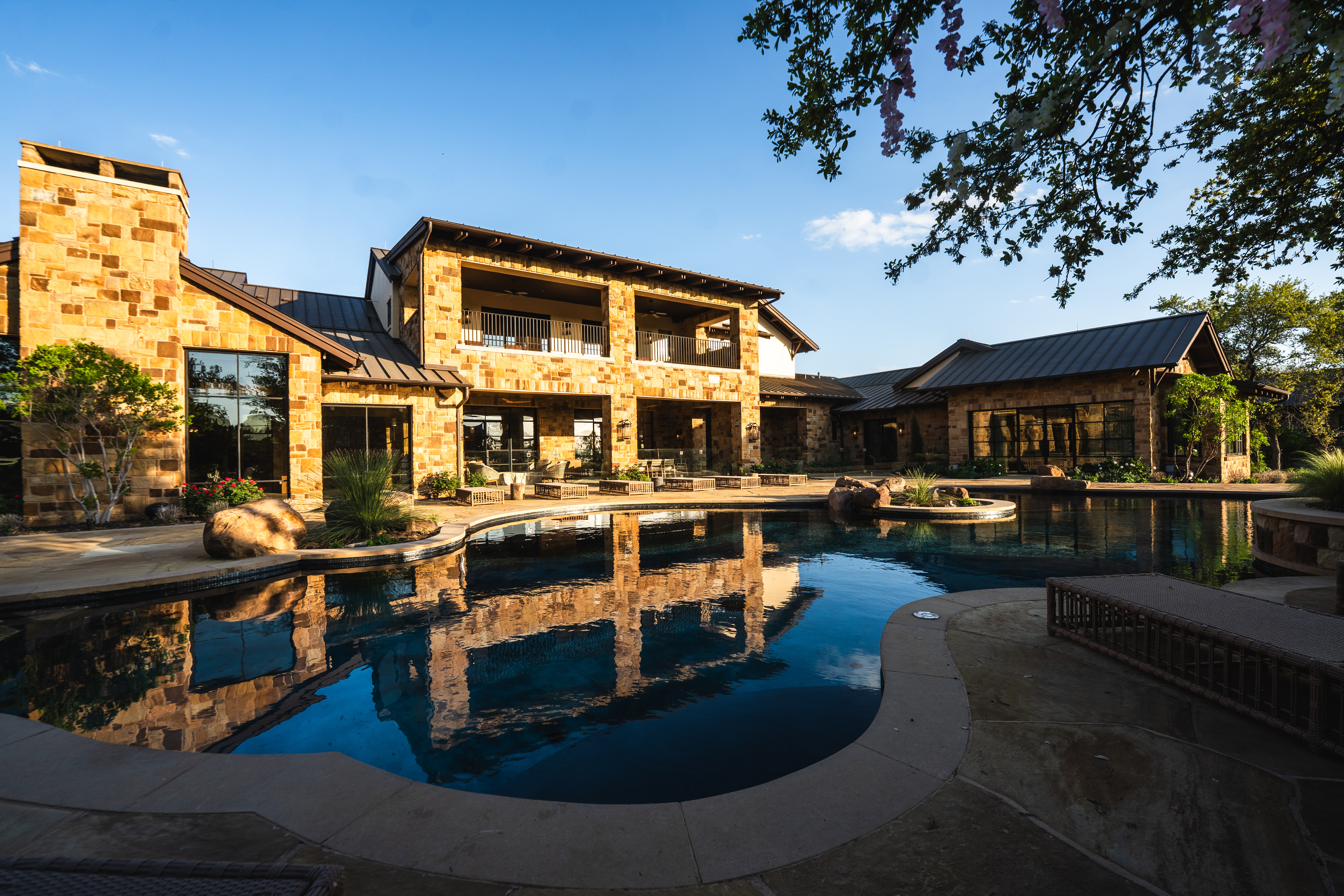
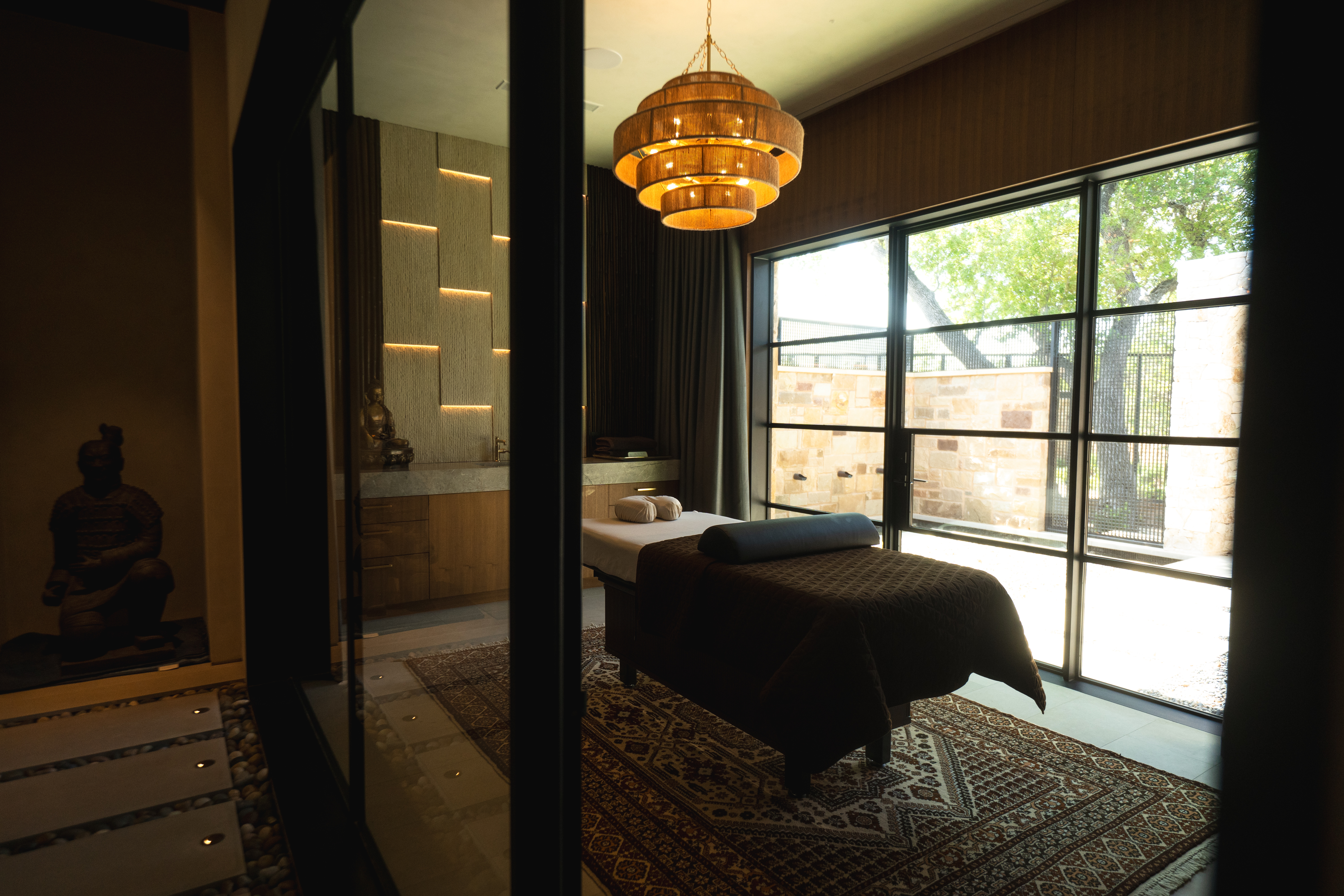
For builders, architects, and interior designers, the hardest projects are often the ones that keep growing. This Austin estate began as a renovation of the main residence with a home addition, a casita, a gym and a spa. During construction, it expanded to include a pool pavilion, a private cinema above a custom automotive showroom, a media and game room, and full landscape lighting control. Each new structure brought its own layout, materials, and timeline, and while there were architectural drawings, no architect was involved to carry the design through the project’s later phases.
 The finished project, Casa de Verano, would go on to earn multiple honors at the 2026 CEDIA Smart Home Awards Americas, along with recognition in CE Pro’s 2026 Home of the Year Awards.
The team had worked together before. Haas Home Technologies, an HTA Certified integrator, recommended Arrowhead Construction as general contractor, continuing a partnership that spans multiple luxury builds. HTA Certified firms are independently vetted for technical proficiency, customer service and aftercare, and business reputation. Haas carried both the high-voltage electrical and the low-voltage scope, including lighting control and the custom theater. Miami-based Verday Designs led the interiors with a layered, textural African safari theme.
"Haas and Arrowhead have built a lot of homes together, and that history matters on a job like this," said Tyson Powell, Arrowhead’s Director of Construction. "When Donny and the Haas team are involved, we already know they’re bringing high-level planning, problem-solving, and execution, so our energy goes to the rest of the project instead of troubleshooting."
Filling the Gaps
With no architect on the later phases, Arrowhead, Haas, and Verday Designs shared construction administration, with Haas taking responsibility for translating design intent into technical execution. That meant producing and maintaining the documents other trades build from: device placement plans, reflected ceiling plans, elevations and wiring schematics, all updated as field conditions changed.
"A lot of the coordination fell to the builder, the designer, and us," said Donny Carlyon, founder of Haas Home Technologies. "Every building had different infrastructure conditions. We kept the drawings current so the electrician, the millworker, and the framers were always working from the same information, and problems showed up on paper before they showed up on the wall."
That coordination happened in a weekly meeting with the owners, Verday Designs, Arrowhead, and Haas at the same table. Arrowhead's Nigel Smith and Jared Yarmowich managed the build and brought the full multi-structure scope home in one year.
"Those weekly meetings were where the details got solved," Powell said. "With the owners, the designer and Haas in the room, decisions were made once, which helped us complete this massive project efficiently.”
Infrastructure Planned Like Structure
Haas treated the technology backbone the way a builder treats structure: planned early, documented, and built for future change. A hybrid fiber optic and Category copper cabling network links every building, with distributed equipment racks in the main residence, casita, gym and spa, and pool pavilion. Each structure could be commissioned and operated on its own as it was completed while still joining a single system, so finished buildings were handed over without waiting on the rest of the property.
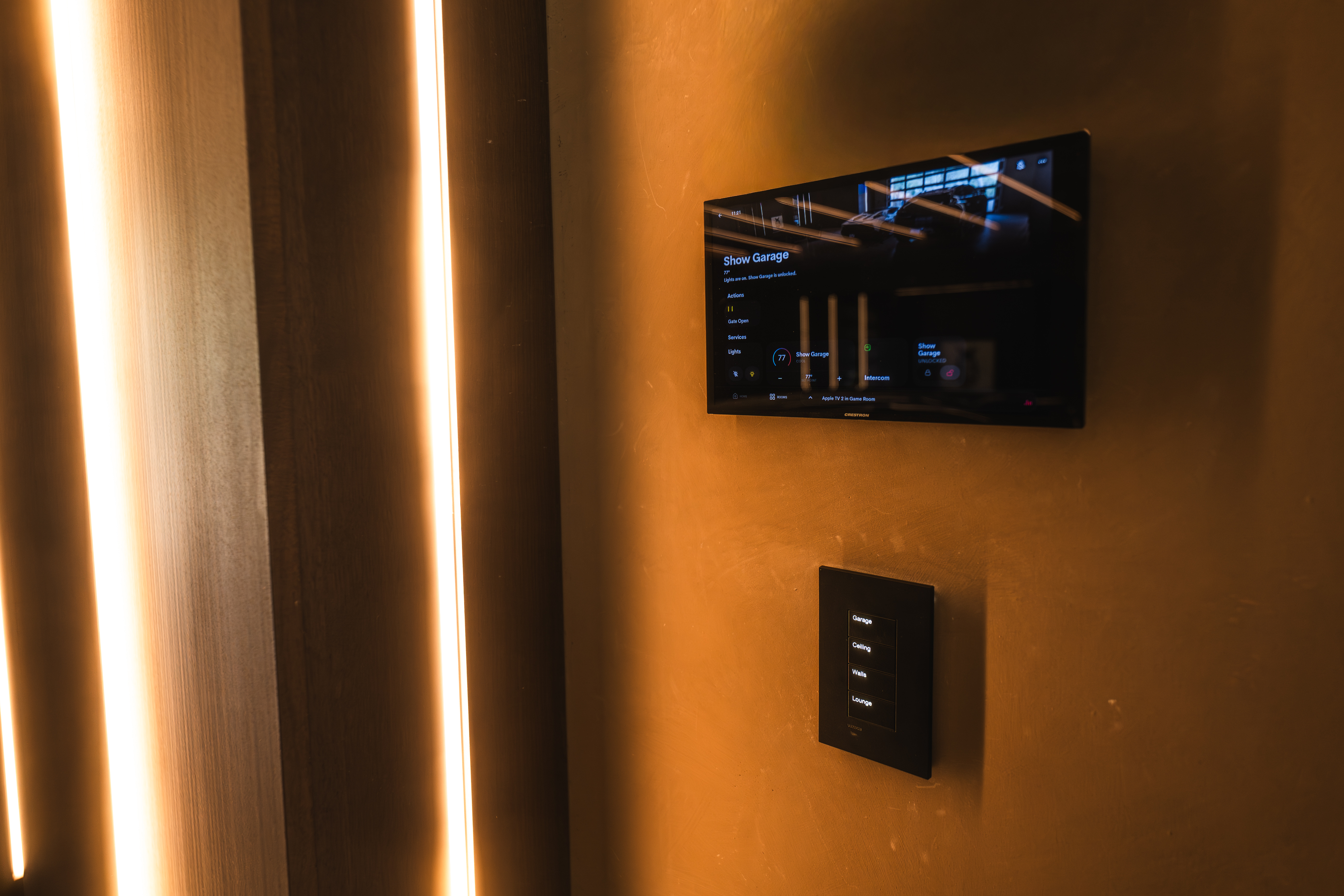
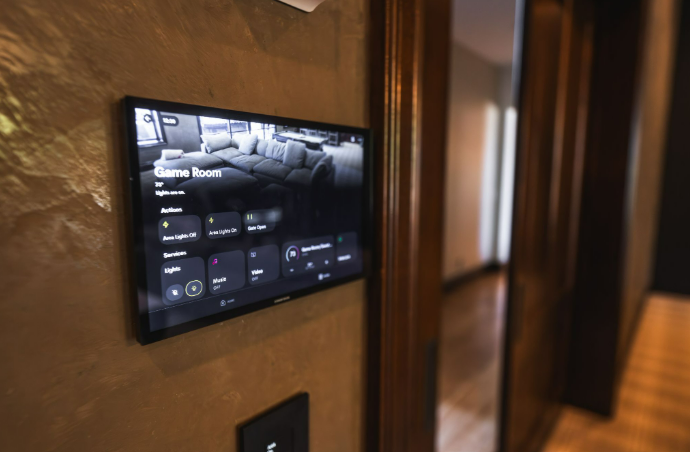
Crestron Home provides one interface for audio, video, lighting, shading, climate and security, and is able to centrally distribute video sources throughout the project. Lutron HomeWorks controls lighting loads and motorized window treatments, giving the design team precise command of both daylight and electric light.
Devices That Respect the Design
For the design team, the visible details mattered most. Keypads, touchscreens, and speakers were located on reflected ceiling plans and elevations and coordinated with millwork, wall finishes, and ceiling layouts so each one reads as intentional. Outdoors, landscape lighting and speakers were selected to perform in an exposed setting while receding into the grounds.
"We wanted the technology to be there when the owners need it and out of sight the rest of the time," Carlyon said. "Lutron let us shape light in a way that supports the architecture and the interiors, and keeping every keypad and interface consistent from building to building is a big part of what makes the property feel like one home."
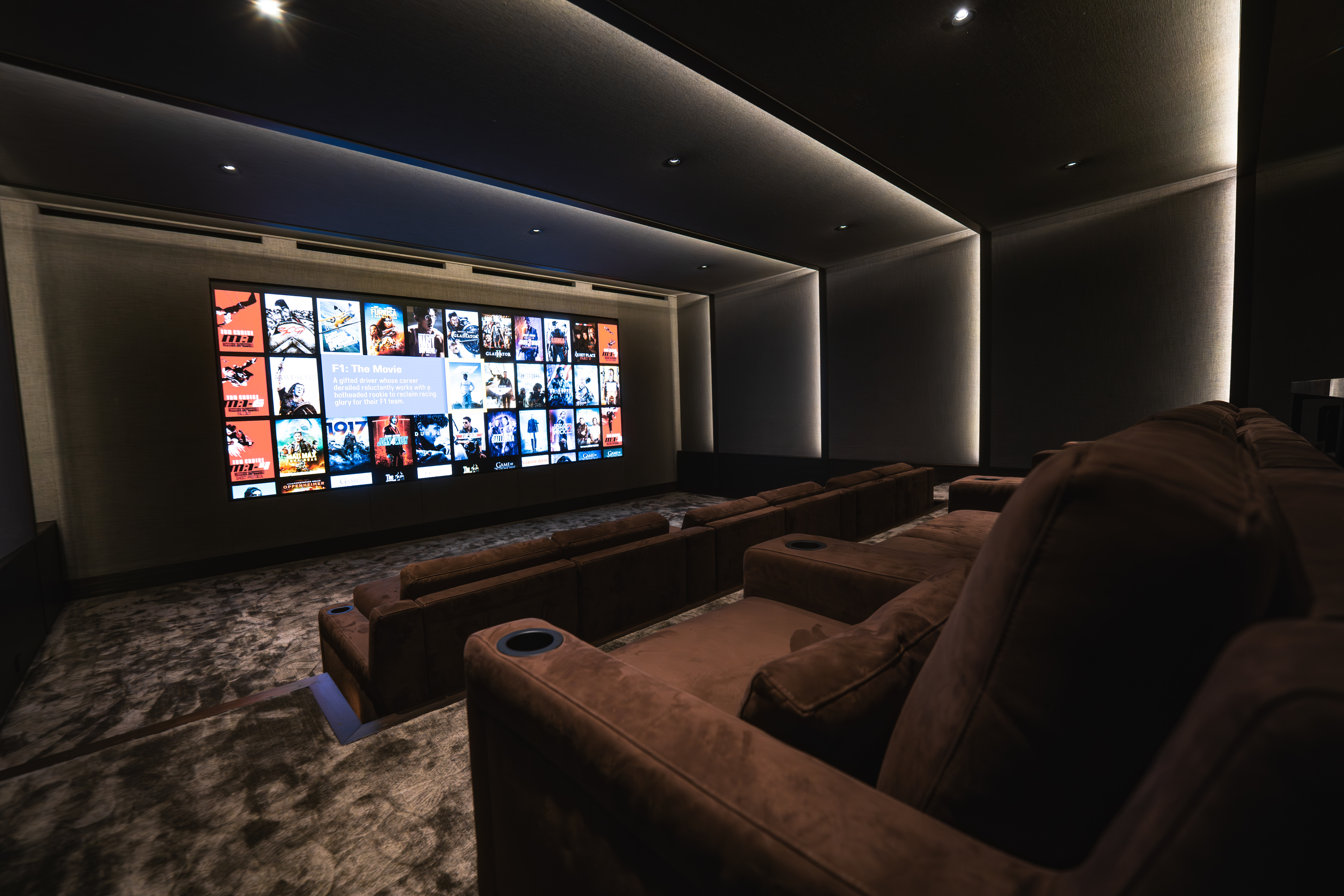
The private cinema posed the most complex coordination challenge. Located above the automotive showroom, it called for a high-output audio system within a refined room, so speaker placement, equipment, and room layout were resolved together with the builder and designer.
The Result for the Project Team
The owners move across the estate with one consistent experience, and Verday's interiors read without visual clutter. The project, Casa de Verano, won Best Integrated Home Level III and Technology Meets Design at the 2026 CEDIA Smart Home Awards Americas, and received an Honorable Mention for Best Home Cinema Level II. It also earned Silver for Best Home Theater Over $100,000 in CE Pro's 2026 Home of the Year Awards.
What Builders, Architects and Designers Can Take From It
This project ran in a different direction than most: the integrator brought the builder to the job. Haas had worked alongside Arrowhead on enough luxury homes to know the team would fit, and that trust shaped everything that followed. Infrastructure was planned with the structure, devices were placed with the finishes, and the integrator's documentation served as part of the construction set, all coordinated at a weekly table with the owners, builder, designer and integrator.
For builders, architects and designers, the lesson is less about the technology than the process. Bring the technology integrator in early enough to create documentation the rest of the team can build from. Coordinate visible technology with architecture, millwork, ceilings and finishes before those decisions become difficult to change. And keep the integrator at the table as the design evolves.

Casa de Verano also demonstrates another benefit of building strong relationships with qualified integrators: they can bring opportunities to your firm as well as help protect the projects you already have. Haas brought Arrowhead into this project because the two companies had already developed trust across previous luxury builds.
When building your own team of trusted design partners, look for an HTA Certified integrator that plans, documents, and collaborates this way from the beginning. [See our guide to partnering with home technology firms.]
"Collaboration with the builder and the design team was essential on this project," Carlyon adds. "As the design evolved, we kept refining our approach together. That flexibility and communication are what kept the technology in step with the architecture and the interiors, from the first building to the last."
You Might Also Like: