
















A design-centric home technology integrator recently described being asked to submit a proposal for a seven-figure technology scope without ever meeting the clients.
The plans were available, and a general scope had been provided. But the conversation about how the family actually wanted to live in the home had never happened. That leaves the project team with a difficult question: What, exactly, is being proposed and priced?
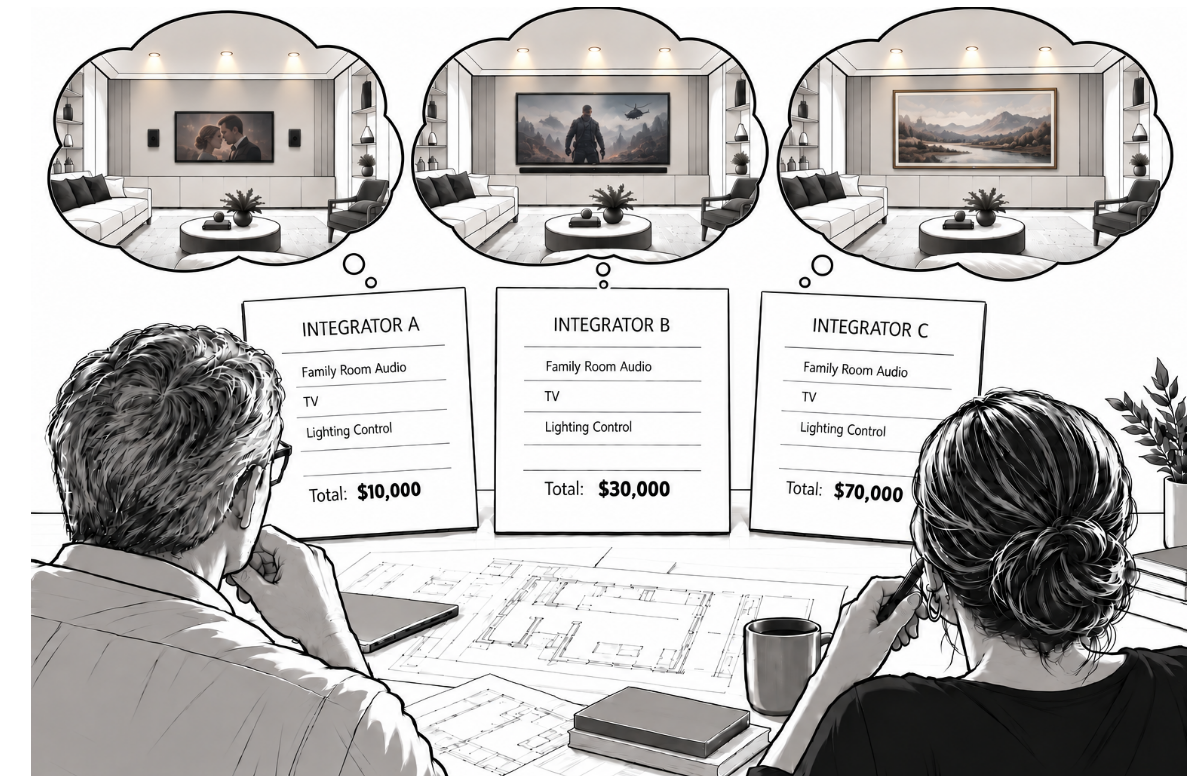
Give three integrators an incomplete brief, and each must fill in the gaps. Their proposals may carry similar headings while delivering very different levels of performance, aesthetic integration, functionality, ease of use, and ongoing support.
For the builder or owner’s rep comparing those proposals, the lowest number can appear to answer the budget question before anyone has established whether it answers the client’s needs.
The Same Plans Can Lead to Very Different Proposals
While a floor plan shows where the family room is, it does not explain what the family expects to experience there.
Is music a background accompaniment to dinner, or does someone love sitting down to hear every detail of a favorite recording? Is the television a focal point, or should it disappear when guests arrive? Will children, visiting relatives, and other household members be comfortable operating the room’s controls? Answers to these questions affect the design.
Yet various proposals can include “family room audio,” “TV,” and “lighting control” while addressing those expectations very differently. Likewise, a lower price may represent better value, but also reflect lower performance, fewer services, omitted infrastructure, or aesthetic compromises the client would never knowingly choose.
The project team needs to understand those differences before treating the totals as comparable.

Discovery Begins With Listening
Some architects, designers, and builders hesitate to bring a technology integrator into a client conversation for an understandable reason: they have experienced the product pitch that arrives before the questions.
An introduction intended to help the project becomes a presentation about equipment. The client gets excited about possibilities before anyone discusses priorities, budget, or design implications.
The best home technology integrators earn that introduction through a consultative process. They take the time to understand how the family lives, what matters to each household member, what frustrates them about their current home, and what experiences they want in their home.
They also educate. Clients cannot ask about possibilities they do not know exist. A useful discovery conversation helps them understand relevant options and tradeoffs while keeping their needs at the center.
Specific product recommendations should follow a thorough needs analysis. This expectation is reflected in the HTA Design Partner guidelines. Available to HTA Certified integration firms that opt into the program, HTA Design Partners establish expectations for collaboration with the design and build team.
If you take a closer look, you’ll see that Guideline 10 is “No Sales Pitches.” Participating firms commit to listening and educating without turning a design meeting into a sales presentation. This gives trade partners a clear standard to seek out when deciding whom to introduce to their clients.
If You Need a Budget Range, Start Here
Sometimes the reason for requesting several proposals is simply to find out what the technology should cost. At that stage, have the homeowner complete the HTA Budget Calculator and share the results with the project team. It provides a realistic planning range based on the home and technology options selected.
The budget range reflects meaningful differences in quality, performance, and aesthetics. Think of the choices available from an entry-level luxury car through a top-of-the-line model: both can be worthwhile purchases, but they offer different experiences.
Technology has similar distinctions. Background audio and a high-performance listening system serve different priorities. A visible television and a carefully concealed display have different design requirements and costs. The calculator helps establish expectations before detailed proposal work begins. Its estimates include design, coordination, documentation, equipment, and installation.
Discovery and project-specific design then help determine where the client’s priorities fit within that range.
Give Design and Engineering Their Proper Place
A productive conversation is the beginning of a defined technology scope. The integrator must translate what was learned into a coordinated plan: which products and systems are appropriate, how they should perform, where devices belong, how they will be controlled, and what the other trades need to accommodate.
That work includes device-placement drawings, wiring plans, equipment-space requirements, electrical and cooling requirements, and coordination with framing, millwork, lighting, and shading.
Think of the integrator’s planning role as analogous to an MEP consultant’s, focused on the home’s technology systems.
This is professional design and engineering work. It deserves a defined scope, clear deliverables, and compensation. HTA advocates engaging integrators for paid consultation and design rather than expecting substantial planning to be absorbed into free estimates.
Doing so gives the homeowner and project team something valuable before installation begins: documented requirements against which the proposed solution can be evaluated.
Define the Experience Before Comparing the Price
When competitive proposals are part of the process, the firms need a common, client-approved basis for pricing. That means documenting the expected performance, aesthetic requirements, system scope, coordination responsibilities, and service expectations. Each proposal should clearly identify exclusions and explain any alternatives.
Different firms may still recommend different approaches. The goal is to make those differences understandable so the client can judge their value.
For your next project, establish a preliminary technology budget, allow time for thorough discovery, and commission the design work needed to define the scope. Your client will live with the resulting decisions every day. The proposal process should begin with a clear understanding of what they want those days to feel like.
Find an HTA Certified integrator and look for the HTA Design Partner designation when selecting a firm for early consultation, design, and collaboration.
You Might Also Like: