
















Imagine walking into a beautifully designed $10 million home. The architecture is spectacular, the interiors are exquisite, and the residence is filled with sophisticated technology.
There's an app for the lighting. Another for the motorized shades. One for the music, another for the televisions, and yet another for the security system. The pool, thermostats, surveillance cameras, and front gate all have their own apps, too.
Everything can be controlled from a smartphone. Unfortunately, controlling the house has become something of a part-time job. How many apps does it take before the convenience of a "smart home" starts becoming an inconvenience?
The terms smart home, home automation, and home control are frequently used interchangeably, but they can describe anything from a few Wi-Fi-connected devices to an elaborate system coordinating technology throughout a large estate. Most connected products come with manufacturer apps, while consumer platforms such as Apple Home and Google Home can bring compatible products into a common interface and create useful automations.
For homeowners with modest technology requirements, these solutions can work well. As the size of the residence and number of systems increase, however, things can become more complicated.
How Many Apps Does Your Home Need?
Consider some of the technologies that might be installed in a large custom residence, each potentially arriving with its own app:
- Lighting
- Motorized shades
- Climate control
- Whole-home music
- Televisions and home theaters
- Security alarms
- Surveillance cameras
- Door locks and access control
- Gates and garage doors
- Pools and spas
- Landscape irrigation
- Energy management
- EV charging
- Water management
That's 14 categories, and some homes have considerably more. Of course, some products share apps, and not every technology needs to be integrated into a single interface. The important considerations are which systems should work together and how convenient they are for everyone to use.
When Separate Apps Start Getting in the Way
An HTA Certified integrator recently shared the experience of a homeowner who had spent two months using separate apps for her Lutron lighting, AquaLink pool, ELK security system, Axis cameras, and Sonos music.
Frustrated by having to remember which app controlled what, she finally asked, "Can you just combine this into one app?"
According to the integrator, Sonos was the only app name she could remember. Frequent prompts to update the various apps added to her frustration.
Imagine the homeowners are entertaining friends. They want to adjust the interior lighting, illuminate the landscape, lower the shades, start music in several rooms, and make the outdoor seating areas comfortable.
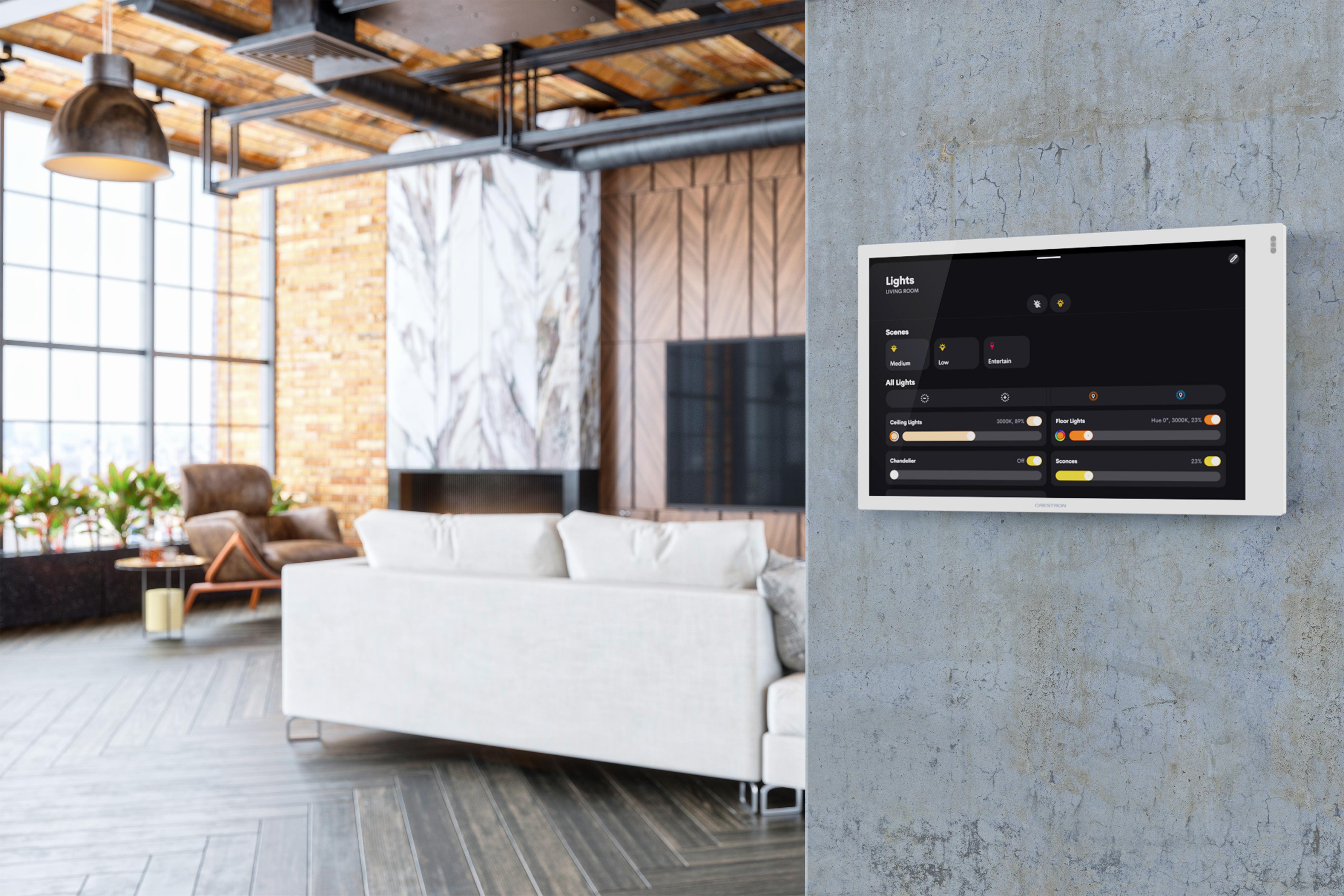
With separate apps, they might need to open several different interfaces, find the appropriate rooms or devices, and make each adjustment individually. With a properly integrated home control system, selecting an "Entertain" scene can coordinate these adjustments together.
A "Good Night" command could turn off selected lights, lower shades, adjust temperatures, arm the alarm system, and switch off entertainment systems throughout the home.
Convenience is one of the biggest benefits of centralized home control. A thoughtfully designed system reduces the number of apps to navigate, interfaces to learn, and steps required to accomplish everyday tasks. It also provides a consistent way for everyone in the household to interact with the technology.
Guests shouldn't need instructions or multiple app downloads to operate the lighting, music, or television in a guest suite. Most homeowners would also prefer a familiar handheld remote for watching television rather than navigating several phone screens to select a source or adjust the volume.
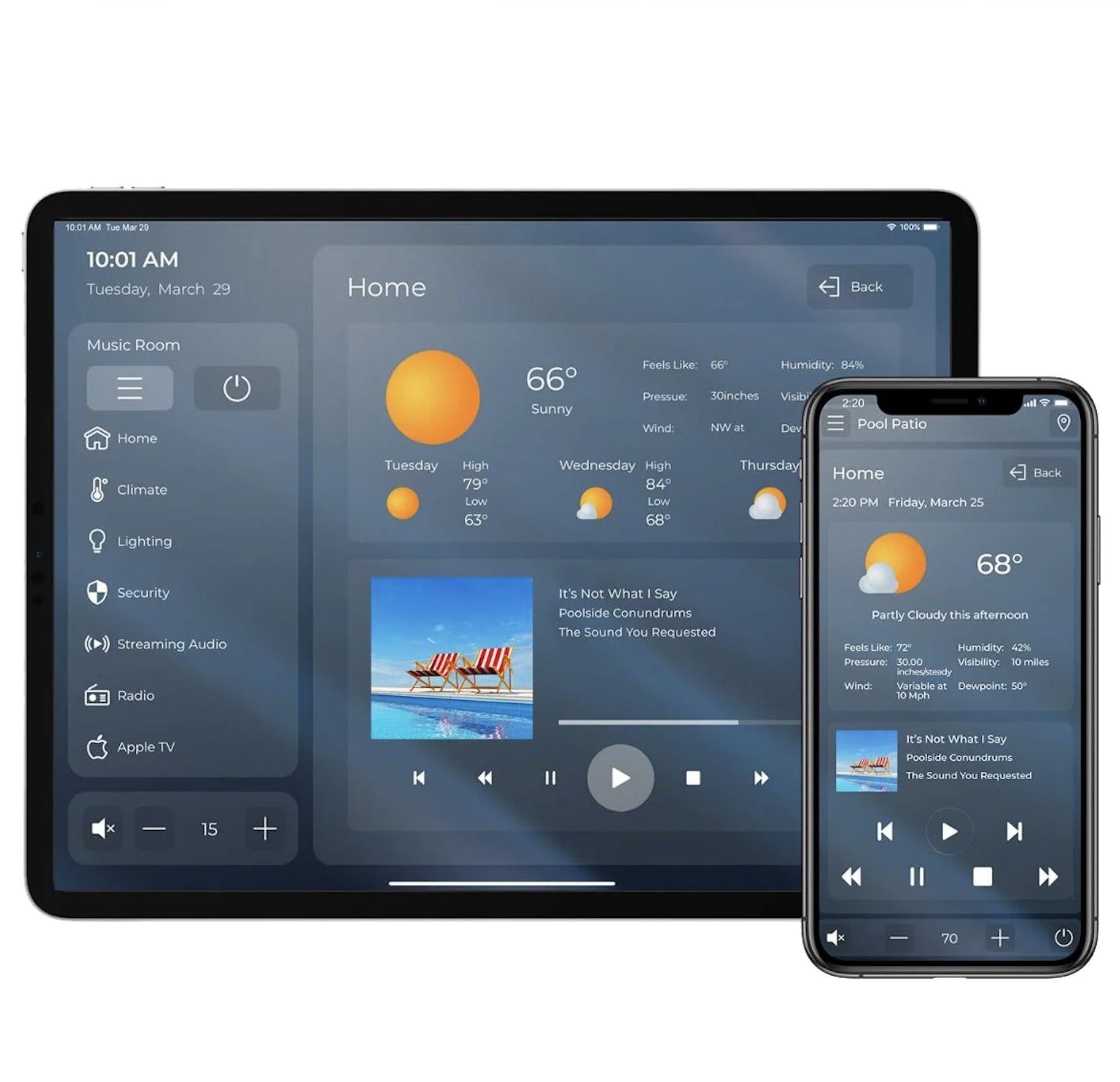
Dedicated wall keypads, touchscreens, and handheld remotes provide immediate access to frequently used functions. Modern control systems also offer mobile apps and voice control, giving homeowners several convenient ways to interact with their technology. Whether you're in the kitchen, primary bedroom, guesthouse, or outdoor living area, the controls can work in a familiar, predictable way.
Aren't Today's Apps Getting Better?
Absolutely. Smart home apps and consumer automation platforms have improved significantly. Matter, a technology interoperability standard, is helping compatible products work across different ecosystems. Apple Home, Google Home, and other platforms support useful scenes, schedules, and routines.
For many homeowners, these capabilities may be all they need. There are also advantages to keeping certain products on their native apps. Manufacturers may offer specialized features, detailed diagnostics, or configuration options unavailable through a third-party control system.
Professional home control systems have tradeoffs, too. They require additional hardware, professional configuration, and a larger investment. They introduce another layer of technology to maintain, and compatibility varies by manufacturer and product.
For a smaller home with basic technology needs, that additional complexity and expense may be difficult to justify. But when a residence has extensive lighting, shading, entertainment, security, climate, and other technologies, coordinating compatible systems through a consistent interface can meaningfully improve daily life.
What About Homeowners Who Have Had Bad Experiences With Control Systems?
This is an important concern, and one the home technology industry needs to take seriously.
Many luxury homeowners have experienced control systems that were unnecessarily complicated, unreliable, or difficult to modify. Sometimes, changing something as simple as a favorite lighting scene required scheduling an appointment with the integration company. Some homeowners understandably concluded that they'd rather operate everything with separate apps.
Fortunately, modern home control systems have improved considerably. Platforms such as Crestron, Savant, Control4, Josh.ai, Nice, RTI, and Basalte offer sophisticated ways to coordinate compatible home technologies through intuitive, responsive, and personalized interfaces.
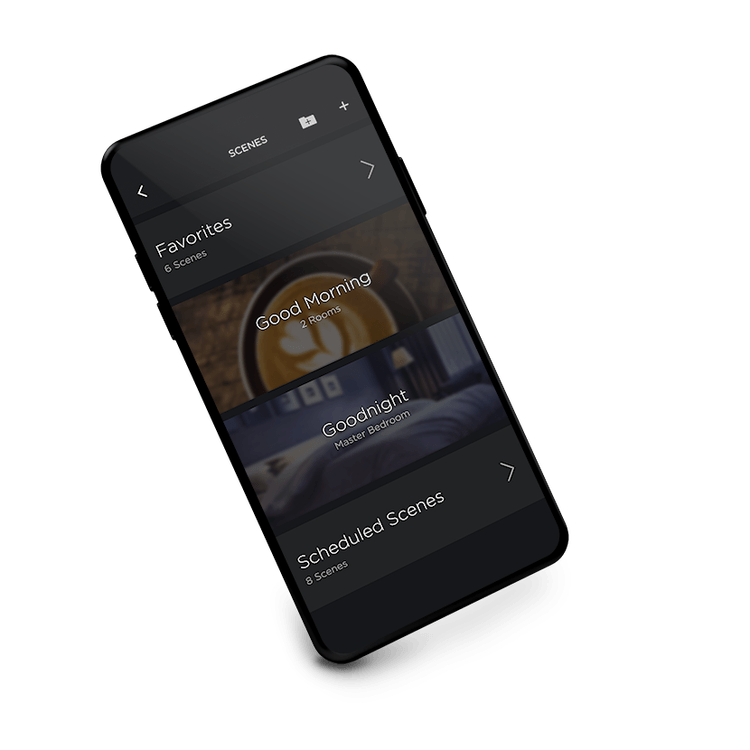
Several platforms now allow homeowners to change favorites, customize interfaces, adjust scenes, or create certain routines without calling their integrator for every minor preference change. The available capabilities vary, and more extensive programming changes may still require professional assistance.
The quality of the homeowner's experience also depends heavily on how the system is designed, installed, programmed, and supported.
The Integrator Matters as Much as the Technology
A poorly conceived control system can turn even excellent products into a frustrating experience.
One reason is that some integrators approach every project with their favorite products and a familiar programming template. The homeowner ends up adapting to the integrator's preferred solution.
A qualified home technology integrator approaches the process differently, spending considerable time learning about the people who will live with the technology before recommending a control system.
How does the family use the home? Do they entertain frequently? Are there children, older family members, or guests who need simple controls? How important are security and privacy? Do the homeowners enjoy interacting with technology, or would they prefer most functions to happen automatically? What technology experiences have frustrated them in the past?
These discussions reveal what matters to the client and help determine the right level of integration.
For some families, a well-designed consumer ecosystem with a few dedicated controls will be appropriate. For others, especially those with large residences and sophisticated technology requirements, a professionally integrated control platform may be an excellent investment.
A good integrator will explain the alternatives, their limitations, and their costs. They'll also resist the temptation to sell features the homeowner is unlikely to use. The objective is a system that works naturally for the people living in the home, with enough flexibility to accommodate changing needs.
The Relationship Should Continue Long After Move-In
Unlike many trades, home technology integrators ideally get involved early in the design process and maintain a relationship with the homeowner long after construction is complete.
As we discussed in If Technology Isn't Discussed in Schematic Design, the Project Is Already Behind, early collaboration allows the integrator to coordinate with architects, interior designers, and builders before decisions about infrastructure, equipment locations, lighting controls, and other essential elements become costly or difficult to change.
During construction, the integrator develops technical documentation, coordinates with other trades, and oversees installation, programming, commissioning, and homeowner training. Following move-in, the integrator continues to provide support as technology changes and homeowners' needs evolve.
Manufacturers release software improvements, new features become available, and families may want to change how they use their homes. A service-focused integrator can help homeowners maintain, adapt, and improve their systems through remote monitoring, troubleshooting, periodic maintenance, useful upgrades, and adjustments to how the technology operates.
An excellent integrator will also discuss service expectations upfront, including response times, ongoing support arrangements, and which technology functions will continue working if an internet connection or central controller fails.
This ongoing relationship is an important part of professional home technology integration, as explored in The Technology Integrator Has Three Jobs. Installation Is Only One of Them.
Designing a Home That's Genuinely Easy to Live In
There's no magic number of apps at which a home suddenly needs a centralized control system. What matters is the homeowner's experience.
Can family members and guests use the technology comfortably? Can common activities be accomplished with minimal effort? Will the systems continue to serve the family as its needs evolve?
These questions deserve attention early in the design process, when the architect, interior designer, builder, and technology integrator can coordinate the best solutions.
At the Home Technology Association, we encourage homeowners and design-build professionals to work with qualified home technology integration firms that take the time to understand their clients and have demonstrated technical expertise, customer service, and long-term aftercare capabilities.
A beautifully designed home deserves technology that's equally thoughtful, intuitive, and enjoyable to use.
Find an HTA Certified home technology integrator for your next project.
You Might Also Like: