



















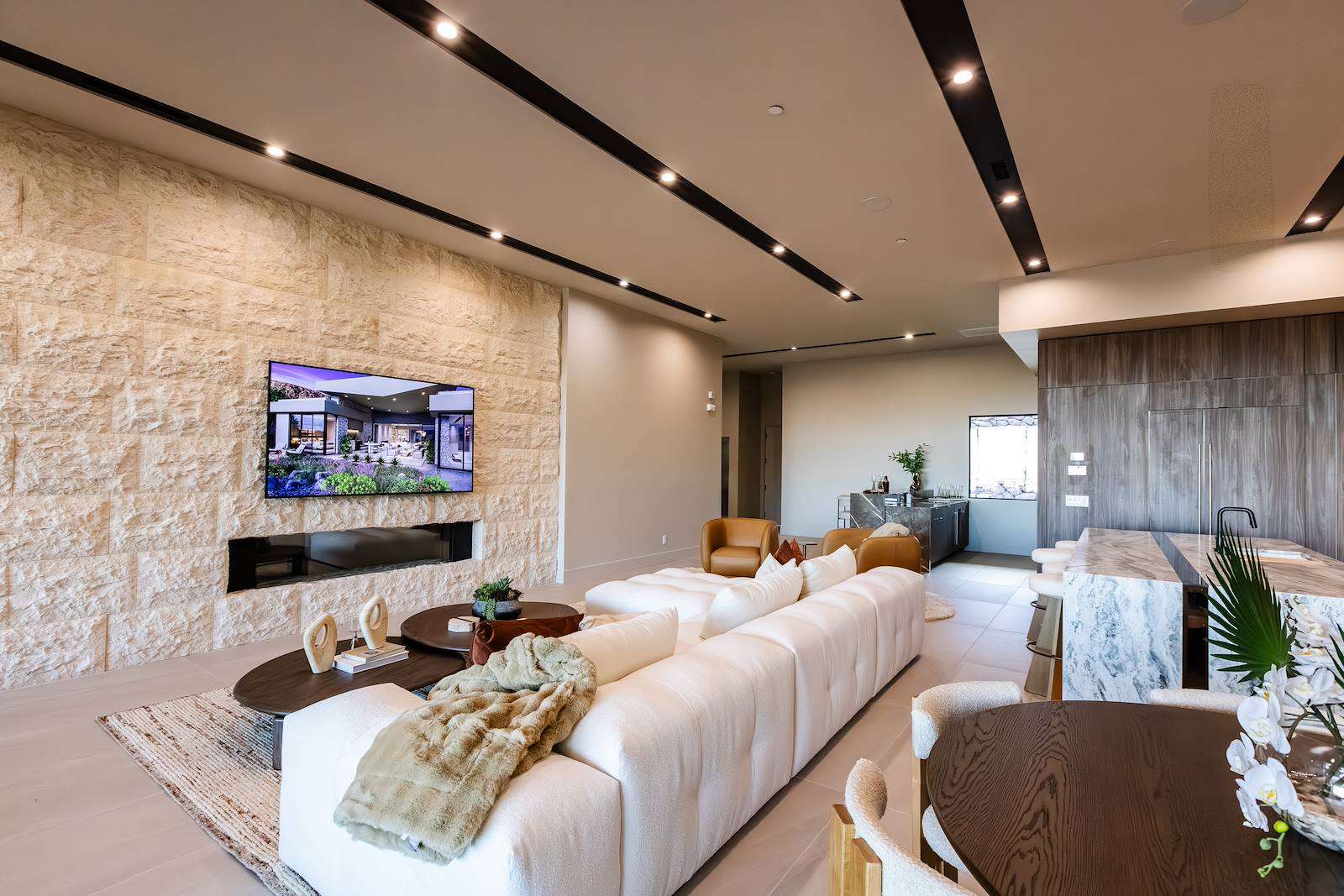
Every homeowner changes their mind. The kitchen they swore would stay quiet gets speakers. The guest room becomes a media room. A technology standard nobody has heard of today becomes the default in 10 years. Whether those changes cost a few hundred dollars or thousands often comes down to decisions made while the walls are still open.
Chris Sterle, CEO and owner of Las Vegas-based Acoustic Design Systems (ADS), an HTA Certified integration firm, has built his company around planning for those changes before the drywall goes up. About 90 percent of ADS's work comes through partnerships with production homebuilders, where his team meets buyers during the design phase and pre-wires each home to accept nearly anything later. We spoke with Chris about what goes into that pre-wire, how he guides homeowners through it, and what architects, builders, and designers should understand about planning for flexibility.
HTA: How do you approach a new home to give the owner as much flexibility as possible down the road?
CS: On almost every project, technology is the line item that gets cut first, or the last thing people think about when they budget a new home. Everyone wants the fun stuff, good sound and a great TV, but they also have to buy a floor, a roof, and furniture. So we are often an afterthought.
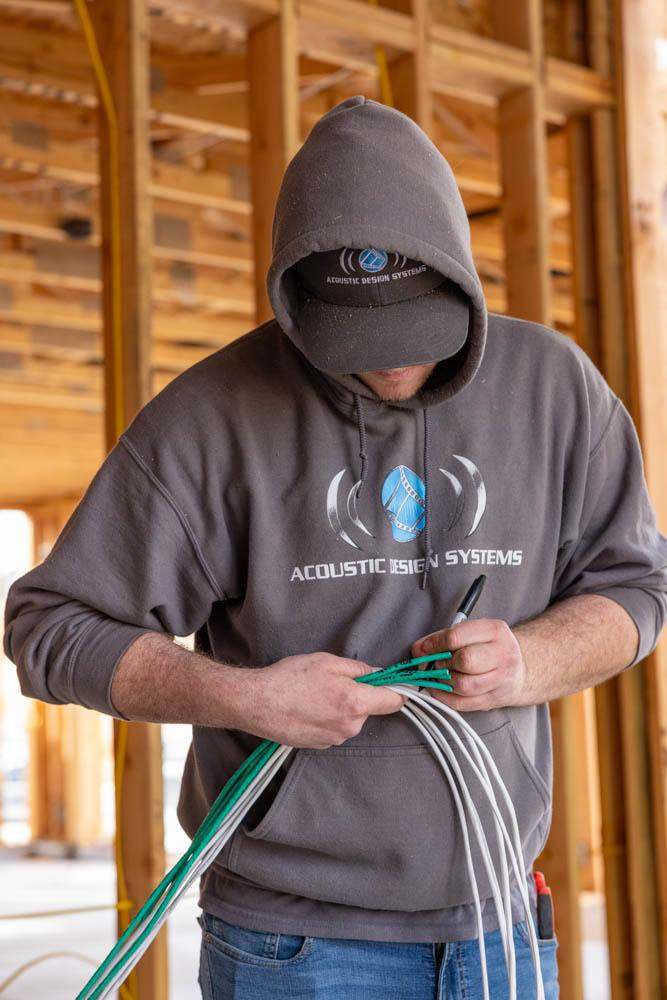
We do everything we can to make sure the home's infrastructure is solid enough for anything the owner might want next week, next year, or next decade. Wiring is very inexpensive to install during construction and very expensive to add after the fact. In practice, that means three things at every key location: Cat 6, fiber optic cable, and flexible conduit.
HTA: Walk us through those three layers.
CS: Cat 6 is today's network wire standard. Nearly every device in a home is now network-capable, and Cat 6 carries audio, video, and data between them.
Fiber optic is likely to become the standard later this decade. We pull it alongside the Cat 6 even though we know it probably won't be used right away, because adding it to the bundle at each video location costs very little.
The most important piece is flexible conduit (also known as flex tube), about an inch to an inch and a half in diameter. In a one-story home, we run it from each TV location up into the attic. In a two-story home, we run it from the equipment rack to the video locations throughout the house. Whatever the standard is 20 years from now, we can pull it through that conduit without opening a wall.
HTA: For our readers, can you explain the difference between Cat 6 and fiber optic cable?
CS: The home technology industry has moved away from purpose-built cables like coaxial cable, the type traditionally used to connect televisions and cable boxes. Cat 6 is the standard because it is a network cable, and nearly everything now communicates over a network. Fiber optic cable does the same job much faster, with higher bandwidth, longer distance, electromagnetic immunity, and more future capacity.
The practical difference today is distance. Cat 6 holds a stable connection to about 330 feet. Fiber can run well beyond 1,000 feet. On a large estate with a casita that has its own small equipment rack, we run fiber between the main house and the casita with a fiber switch on each end, then use Cat 6 inside each structure. Audio, video, control, anything you want can be shared between buildings that way, because it is all traveling over the network.
HTA: A lot of builders assume more devices will be wireless in the future. Why not just rely on Wi-Fi?
CS: Wireless technology depends on wired infrastructure. Wi-Fi access points need network cables, which often also supply power. Hardwiring devices improves reliability and frees Wi-Fi capacity for phones, tablets, and devices that need it. A high-performance wireless network starts with proper wiring. Wireless is no excuse to skip the infrastructure.
HTA: Does the same thinking apply to speakers?
CS: Yes. Most speakers still run on standard two-conductor copper wire. Some newer products, Sonos among them, builthe amplifier into the speaker a connect over the network. Again, a hardwired connection is always better than Wi-Fi for speakers.
When we walk a set of plans with a homeowner, or walk the house once it's framed, I don't ask where they want music. I ask, "Where in your house would you never want to listen to music?" People think about it differently that way. If they ask for speakers in the living room, we follow up: What about the backyard? The kitchen? It's much easier to narrow down where they want sound now and where they might want it later.
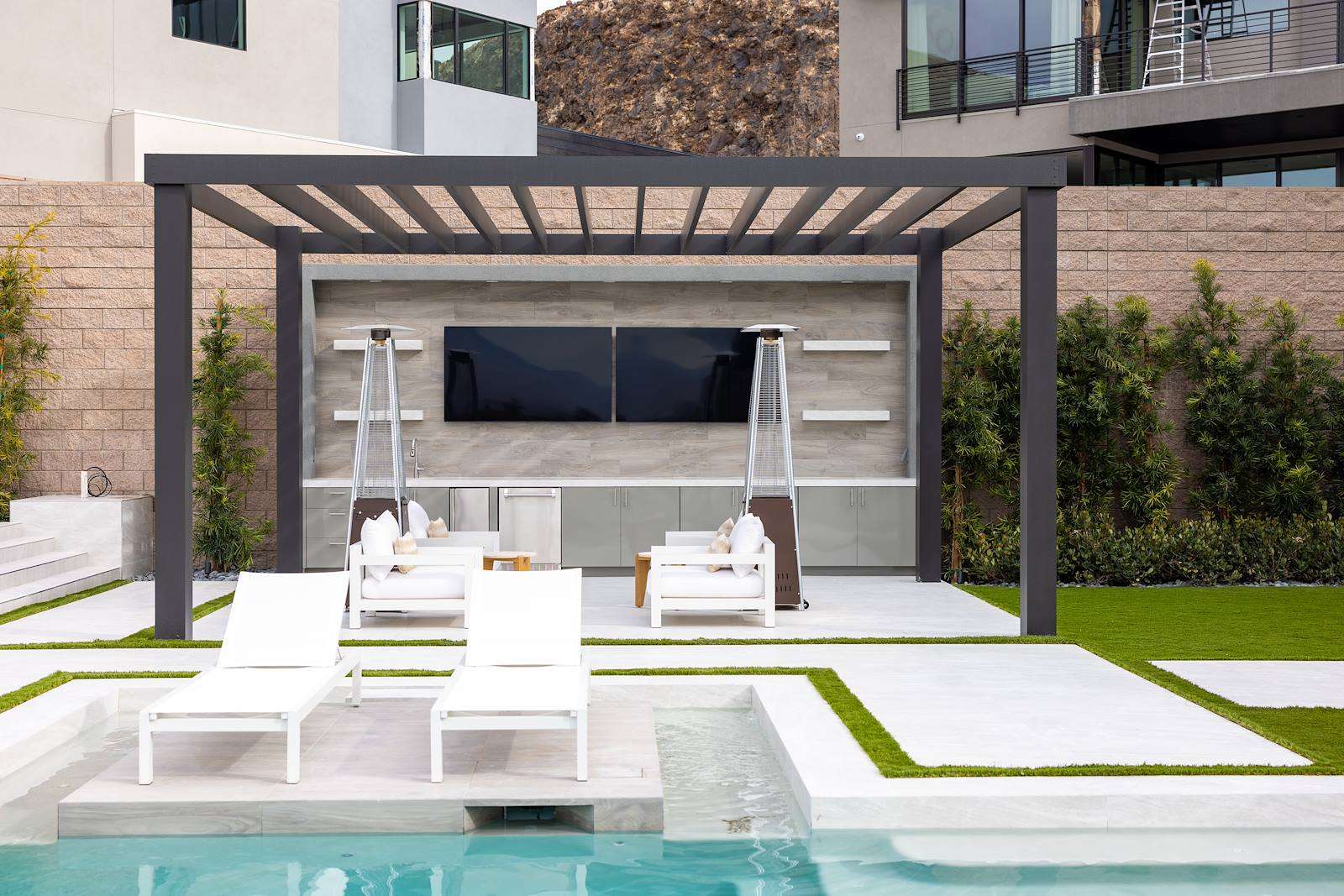
If a room is a definite yes, we install the speakers during construction. If it's a maybe, we lace speaker wire between the studs or trusses in the ceiling. We also document every home with photos and video during construction. Years later, when the owner says, "It's finally time, I want speakers in this room," we know exactly where the wire is. We cut the opening, set the speaker, and add the electronics.
HTA: Which rooms do people usually say no to for speakers?
CS: The laundry room, guest bedrooms, maybe a pantry. Those are literally the only rooms in my own house without speakers.
HTA: About 90 percent of your work comes through homebuilder partnerships. How did that model come about?
CS: Around 2011 and 2012, most of the industry was focused on high-end custom homes, which means working with architects, general contractors, and designers on one home at a time. I saw that the upper-middle market of production homebuilding was underserved. Those buyers still want technology, and no one was focused on them.
HTA: How does that look for the buyer?
CS: We build an options program for each builder and present it to buyers during the design phase. Every video location already includes Cat 6, fiber, and flex conduit. Buyers don't have to decide on their entire technology plan while they're also choosing paint colors, tile, and countertops. We ease that pressure now and give them complete freedom once they move in. As their needs change, the house is ready.
HTA: How do you present a pre-wire program to builders who are used to spec packages?
CS: We are the ones writing the spec packages. Our role is to educate the builder on the best options and track take rates across buyers, so the packages reflect what people actually want and generate revenue for the builder and for us. Builders lean on us instead of dictating what they think the package should be. I wouldn't tell a tile setter how to set tile.
Before we came in, many builders in this market relied on electricians who would offer to "pull some extra wire" while they were in the house, without much thought about the low-voltage infrastructure. We asked for one community to show what we could do. That turned into exclusive relationships, and we now work in 20+ communities.
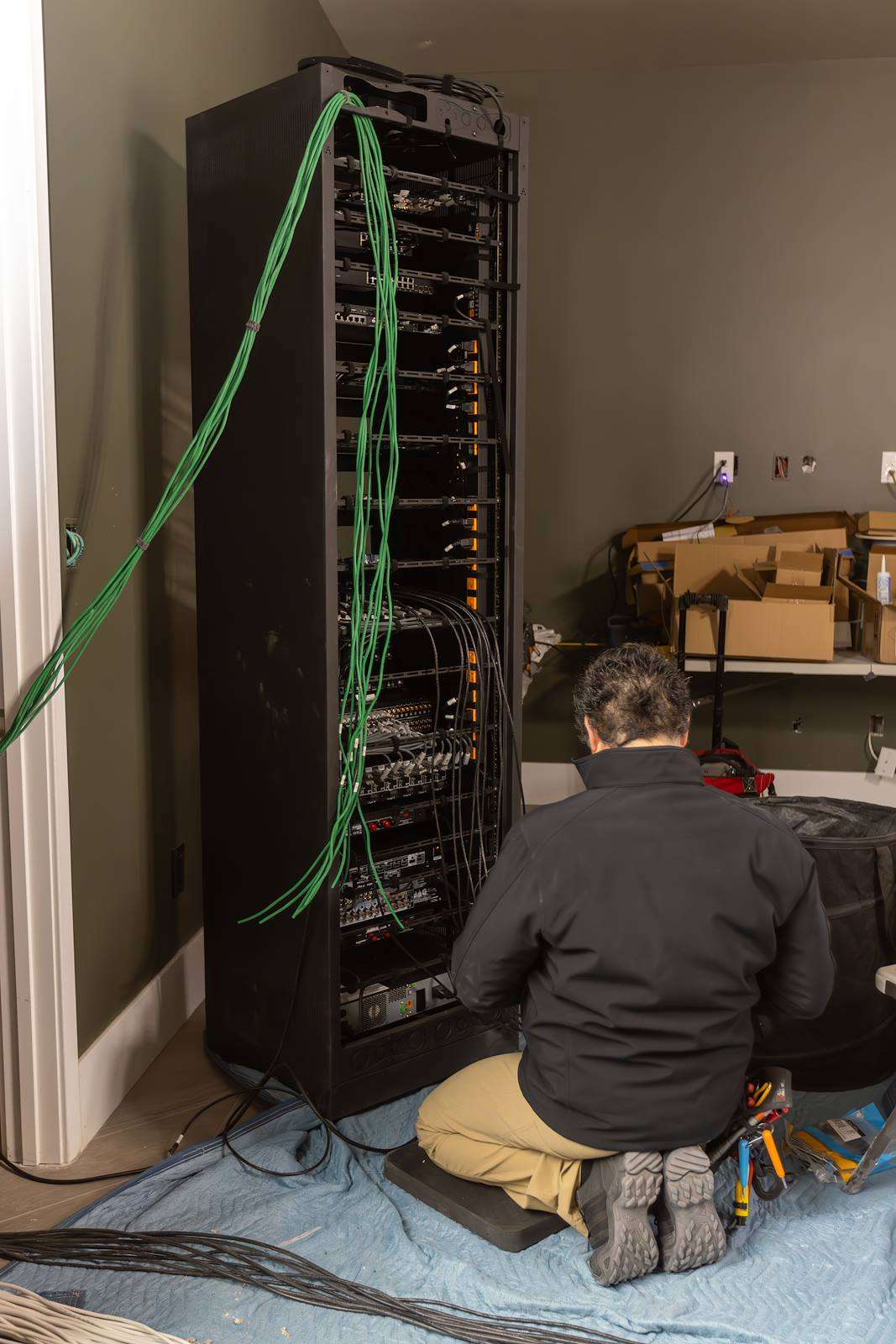
Once we had standardized the process for production homes, we brought it to custom builders, architects, and designers. We lay out exactly what happens from day one: when the builder reaches a given milestone, it triggers our next step. The same process scales to million-dollar custom homes. No one gets a shopping list of 3000 parts that they don’t understand. We sell solutions and complete systems, not parts. When you buy a Mercedes, the dealer doesn’t sell you brake fluid and windshield wipers, they sell you a complete, amazing car.
HTA: What do you typically include in your pre-wire, and how do you plan the installation to protect signal reliability and accommodate future technology?
CS: At each location, we typically run shielded Cat 6, fiber, and flex conduit. We use shielded Cat 6 cable for video distribution because high-bandwidth video signals can be sensitive to electrical interference. Shielding provides additional protection against EMI and crosstalk (interference), helping reduce the risk of dropouts and other signal problems. Fiber is the faster, more future-ready version of the same connection. The conduit covers whatever comes after both.
We also insist on going in after the electricians. Electricians will often share the holes we drill in the top plates to move faster. We want our cable in its own holes, in separate stud bays, and elevated away from electrical runs so we never have electrical interference problems.
HTA: Does cable quality matter?
CS: Cheap turns out expensive. Say a low-quality Cat 6 run of 250 feet picks up interference and starts dropping signal. Now the cable has to come out and be replaced, and you pay for the job twice. It isn't a conversation we have with homeowners. You just buy the right cable, because if it fails, replacing it is on us. The problem usually comes from bargain contractors who promise to do it cheaper by using inferior cable, and the homeowner pays later in lost signal and poor performance.
Can you put a number on the difference between planning ahead and adding later?
Say you want a Cat 6 run from the structured wiring panel to the primary bedroom. During construction, that's about a $125 option, including labor and parts. After the home is closed up, the same run can take two to four hours depending on the construction. Pulling wire is a two-person job, and at $150 per hour per technician, even a best-case two-hour visit is $600 in labor. With parts, you are at roughly $650, compared with $125 during construction.

What do you most want architects, builders, and designers to understand about planning for flexibility?
It matters, and you need to work with an integrator who tells you it matters. Pick a reputable company that cares about the final product and can educate and guide the client along the way, not one running a self-serving ego project that convinces the homeowner it knows best. Education is more valuable than simply telling clients what to do.
Have you taken over projects from other integrators that didn't plan ahead?
All the time, and it's a nightmare. Las Vegas has a constant stream of new residents, so a company can do poor work for one client and still find the next one who has never heard about them. Our industry is also not well regulated, which I think is why HTA exists. It gives homeowners, builders, and architects a way to find integration companies that have been vetted and know what they're doing. I'd put more trust in that than in a guy with a Honda Civic and a ladder on the roof.
For builders, the lesson is straightforward: pre-wiring isn't about predicting every technology a homeowner will eventually buy. It's about putting inexpensive pathways and infrastructure in place while they are easy to install, so future choices don't require opening finished walls, compromising the design, or creating expensive retrofit work. For more on this topic, read our previous newsletter, A Luxury Home Without Proper Cabling Isn’t a Luxury Home.
You Might Also Like: