

















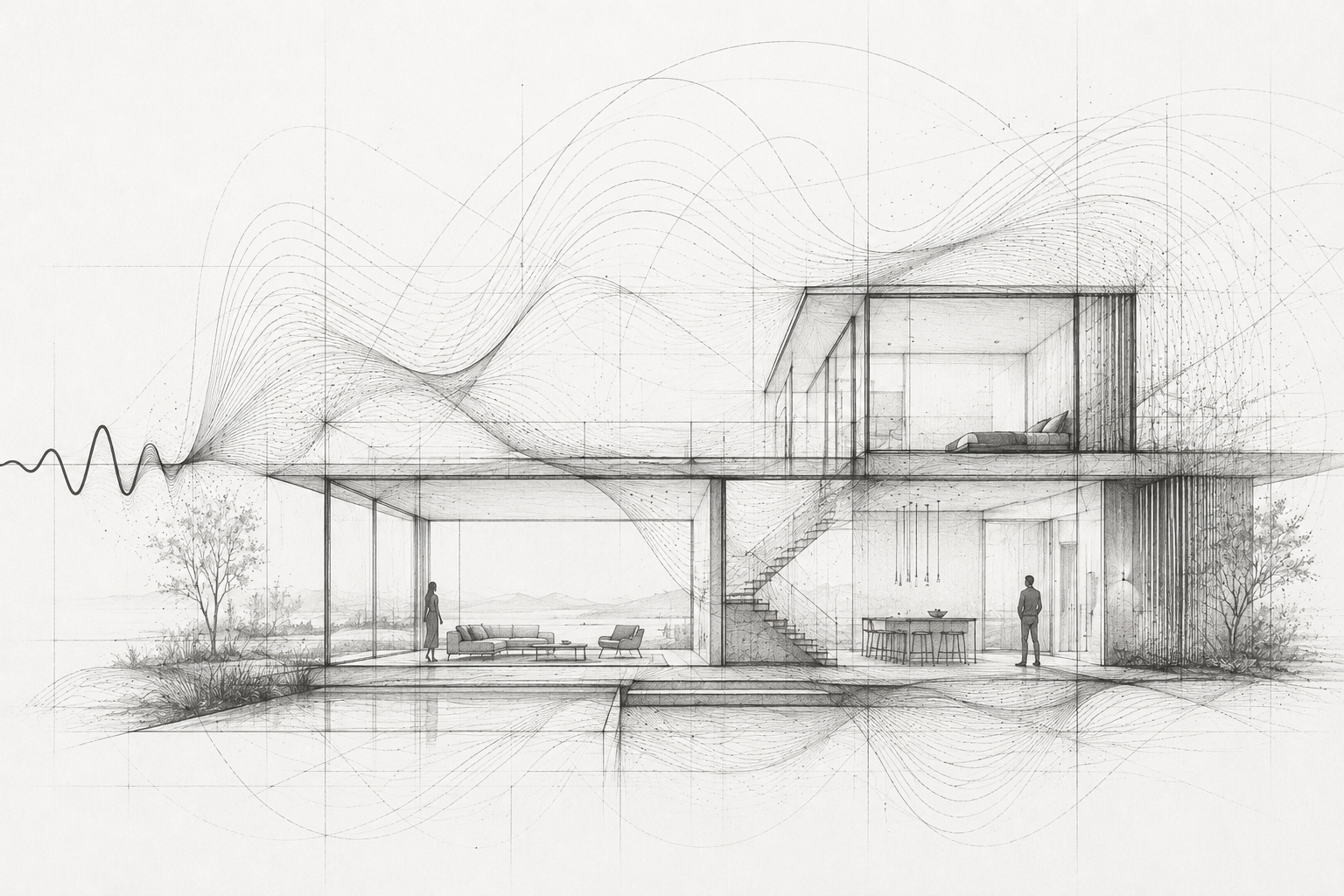
We’ve all been in beautiful modern homes where conversation is surprisingly difficult. Floor-to-ceiling glass, stone floors, expansive open spaces, high ceilings, and other hard surfaces can create rooms that look spectacular but are echoey, making conversation difficult and the space uncomfortable.
It’s easy to assume that this is simply one of the tradeoffs of contemporary architecture and interior design. It doesn’t have to be.
With acoustic considerations addressed early, even highly reflective spaces can be made considerably more comfortable without compromising the architecture or interior design. And one resource architects, builders, and designers may not immediately think to involve in that conversation is the home technology integrator.
Home technology integrators routinely work with speaker placement, room acoustics, equipment noise, sound isolation, audio performance, home theaters, media spaces, and whole-home audio systems. Many have substantial acoustical expertise that extends far beyond dedicated entertainment rooms. When a project requires expertise beyond their capabilities, integrators often collaborate with highly skilled and trained acoustic specialists.
Bringing this knowledge into the conversation early creates more opportunities to address acoustic considerations through architecture, interiors, construction, and technology, and to create calmer, more comfortable environments throughout the entire home.
Acoustic Comfort Is a Whole-Home Design Consideration
Acoustics are sometimes associated primarily with home theaters, listening rooms, and other spaces where audio performance is a priority. But acoustic comfort matters anywhere people spend time.
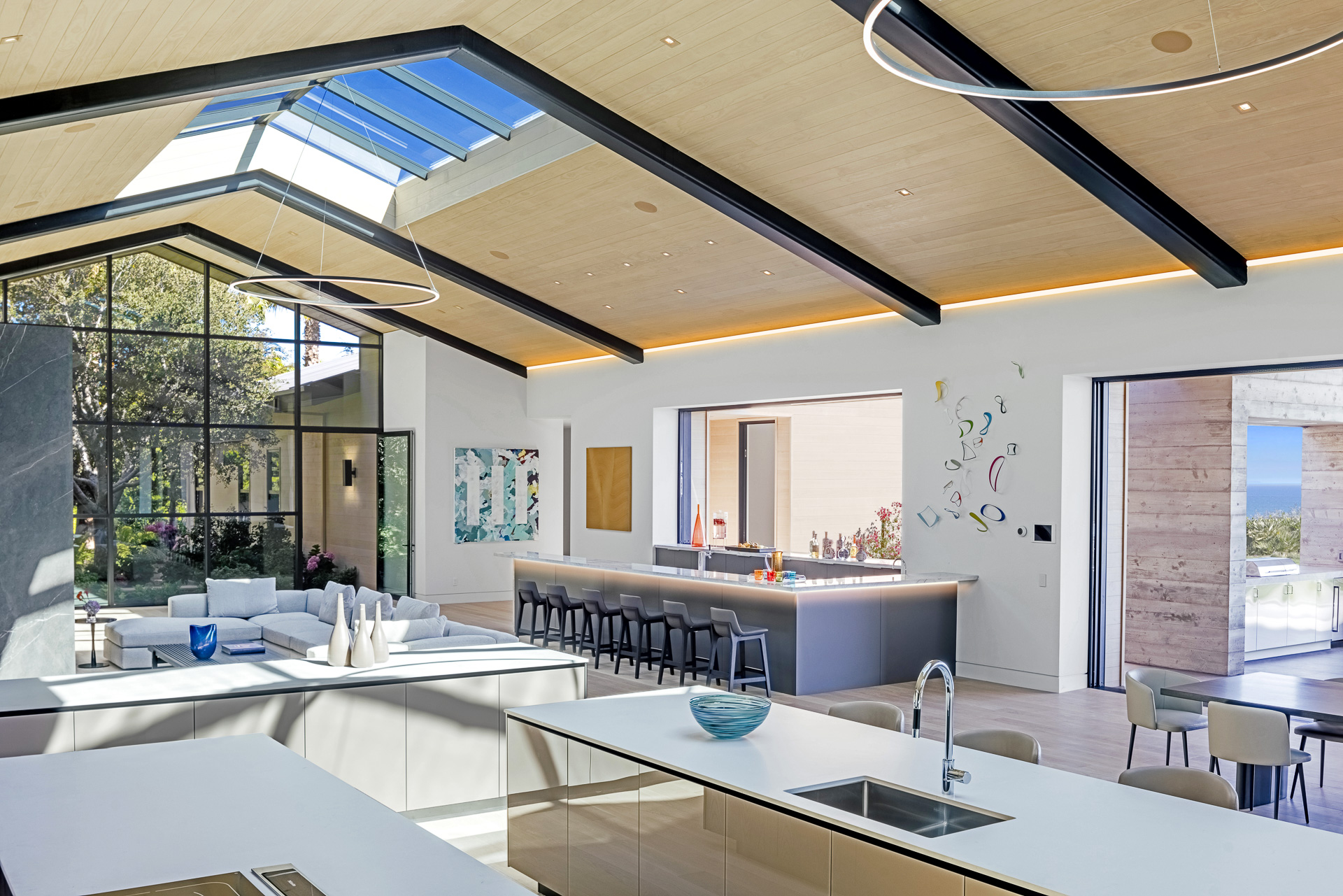
A kitchen filled with stone, glass, and hard cabinetry can become exhausting when several people are talking at once. An expansive Great Room may be visually stunning yet make it difficult for guests across a dining table to understand one another. Home offices need freedom from distracting noise. Bedrooms benefit from isolation from mechanical systems, entertainment spaces, exterior noise, and activity elsewhere in the house.
Even outdoor living areas can benefit from acoustic planning when traffic, mechanical equipment, generators, or neighboring properties interfere with the desired sense of tranquility.
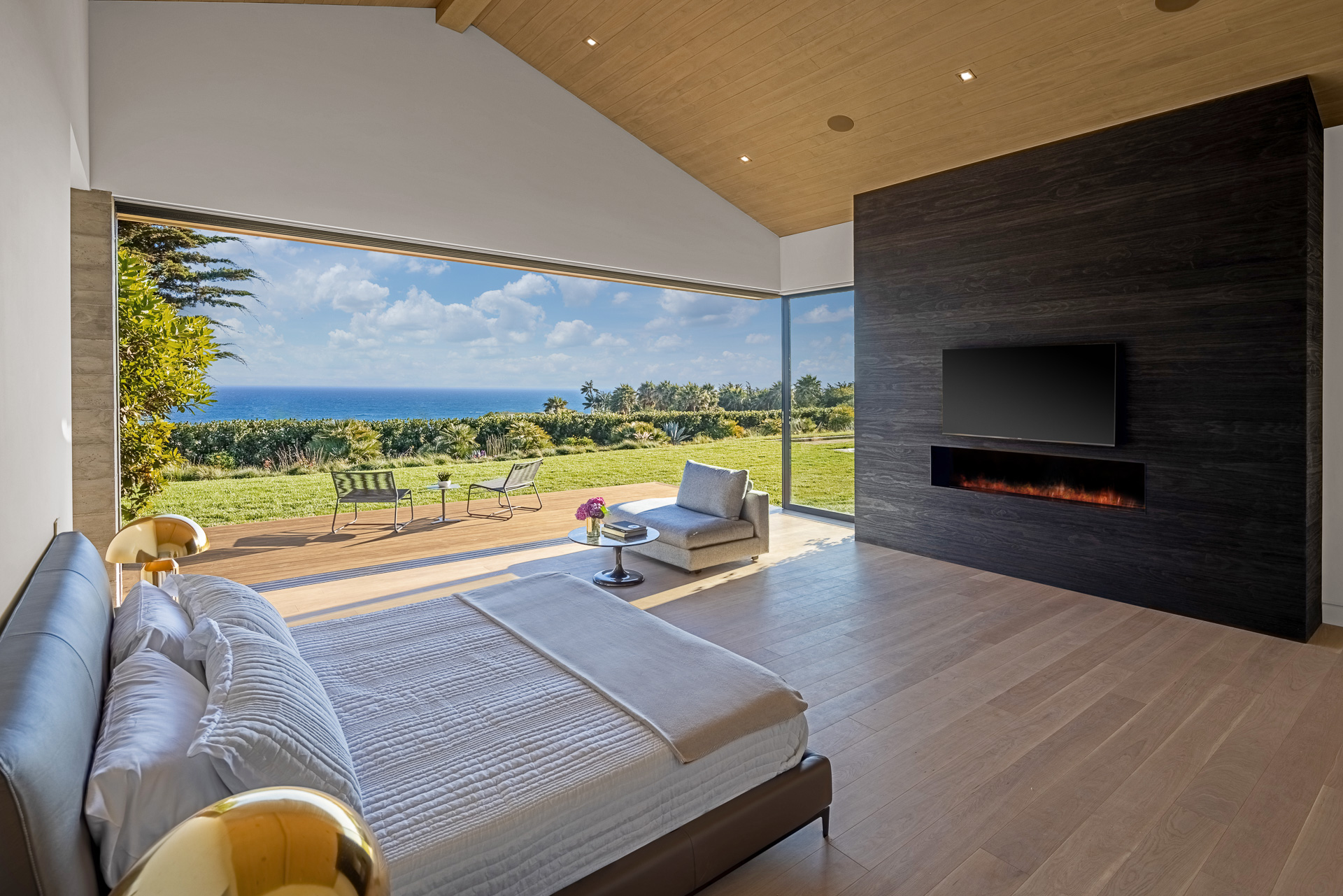
The goal isn’t to make every room acoustically “dead.” As acoustic designer Steve Haas, SH Acoustics explains, “A completely acoustically ‘dead’ room is not necessarily a comfortable space.” The objective is to consider how sound behaves within and between spaces and create an acoustic character appropriate to how each room will be used.
That makes acoustics a whole-home design consideration, not simply an audio-system consideration.
The Wellness Issue We Don't Always Notice
One of the more interesting things about acoustics is that homeowners can experience the effects of a poor acoustic environment without consciously identifying sound as the problem.
Our hearing continually provides the brain with information about our surroundings, including the location and character of sounds. In highly reflective spaces, sound reaches our ears from multiple directions and at slightly different times, requiring the brain to continually process that information.
Anthony Grimani, founder of PMI Engineering and Grimani Systems, describes this subconscious process vividly: “We are all equipped with a 3D acoustic radar that we use to detect if situations around us are dangerous.” Our surroundings have changed dramatically from those of our ancestors, but our brains still continually interpret acoustic information and try to locate the sounds around us.
Acoustic wellness explores the relationship between unwanted sound and low-level stress. Environmental noise has also been associated with sleep disturbance, impaired performance, physiological effects, and general annoyance.
Haas points to an important reason acoustics can be overlooked during residential design: “You can’t see sound, and if it’s not visual or tactile, it doesn’t resonate.”
But homeowners certainly experience the result.
That makes acoustic comfort relevant to the same residential wellness conversations taking place around light quality, air, water, and thermal comfort. As Haas argues, “Acoustics needs a place at the table.”
Early Involvement Creates More Ways to Solve Acoustic Problems
Many architects, designers, and builders recognize acoustic problems eventually. The challenge is that “eventually” can be very late in the project.
Once the architecture is established, finishes have been selected, mechanical systems located, ceilings designed, and millwork detailed, the number of elegant ways to address an acoustic issue becomes much smaller.
When the technology integrator or acoustic specialist is part of the design team early, potential acoustic issues can be identified while architectural, interior design, construction, and technology options are all still available.
They can help the team consider:
- Reverberation and speech intelligibility in kitchens, great rooms, dining areas, entertaining spaces, and other highly reflective rooms
- Loudspeaker locations and performance requirements for whole-home architectural music systems as well as dedicated theaters and listening rooms
- Sound transmission between entertainment spaces, bedrooms, offices, living spaces, and adjoining rooms
- Exterior noise and its potential impact on interior and outdoor living spaces
- Equipment that could introduce unwanted mechanical or electrical noise
- Isolation requirements for theaters, listening rooms, gyms, game rooms, and other active or high-output spaces
- The placement of equipment racks, projectors, cooling systems, subwoofers, architectural speakers, and other technology whose location can affect the acoustic environment.
Acoustic Solutions Can Disappear Into the Design
Thoughtful acoustic planning doesn’t have to compromise the interior aesthetic. In fact, some of the most interesting acoustic solutions are nearly invisible.
Wall and ceiling assemblies, architectural details, millwork, fabrics, furnishings, specialty materials, equipment placement, and other strategies can all contribute to acoustic comfort while supporting design.
Some home technology brands make acoustic treatments designed to function as attractive architectural or decorative elements appropriate for spaces throughout the home, not just a private cinema.
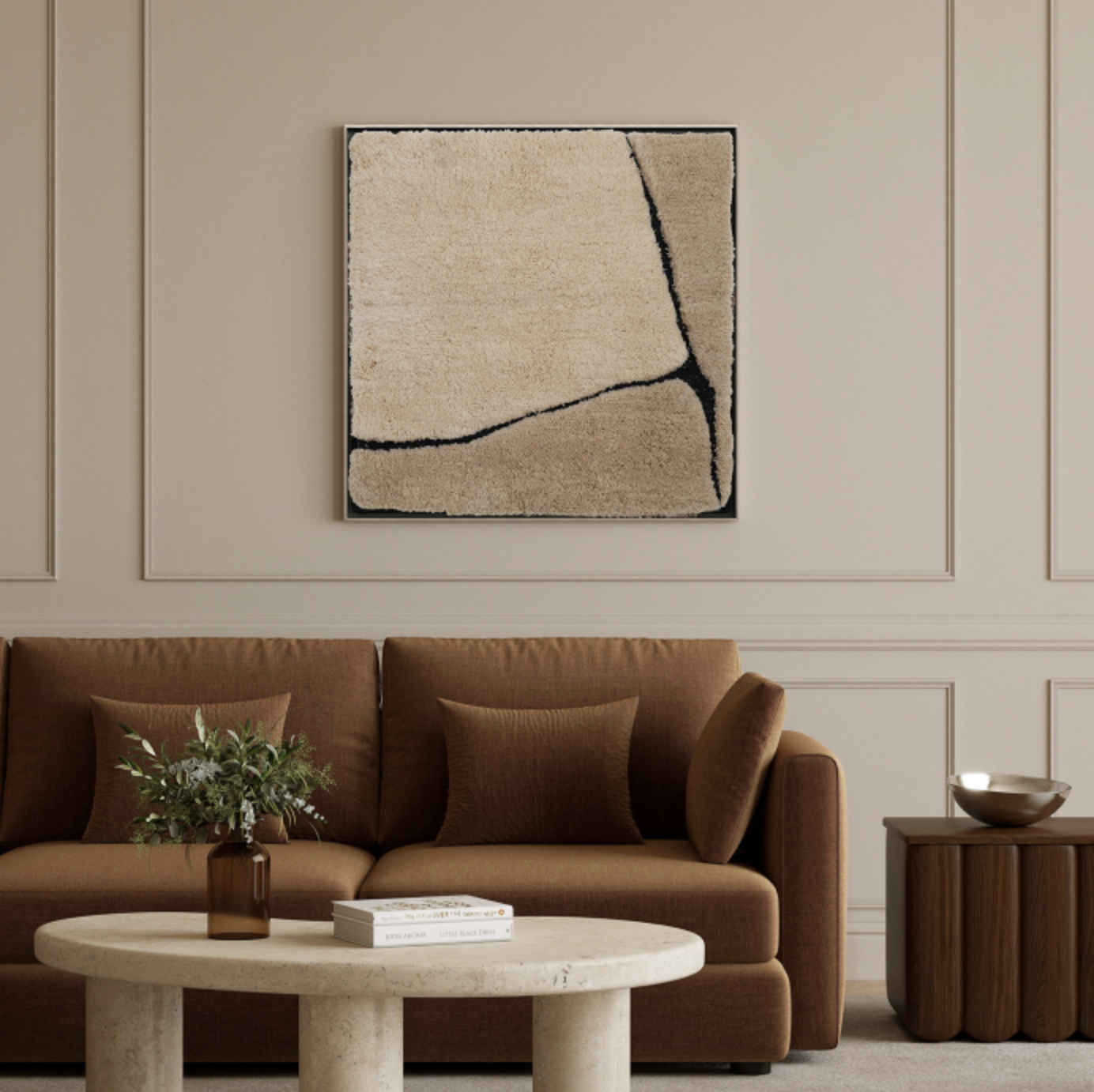
Other solutions can virtually disappear.
Eurospan from Conwed is a particularly interesting example. Rather than a conventional acoustic panel, Eurospan is a system of tracks, acoustic core material, and stretched fabric that can create custom acoustical wall and ceiling surfaces. With the right fabric and detailing, the finished surface can have the clean, monolithic appearance designers normally associate with Level 5 finished drywall while providing meaningful sound absorption.
That opens up possibilities in precisely the kinds of spaces where conventional acoustic panels might be aesthetically undesirable: contemporary great rooms, kitchens, dining rooms, galleries, hallways, and large entertaining spaces.
The broader point is that acoustic treatment does not necessarily mean adding conspicuous objects to a finished room. When considered early enough, acoustic performance can become part of the architecture itself.
Acoustic Comfort Deserves a Seat at the Design Table
For the design-build team, involving the technology integrator early provides access to another resource already working at the intersection of technology, architecture, and sound. That expertise plays a role throughout the home, extending well beyond the home theater.
The same acoustic thinking that makes a private cinema comfortable can inform a peaceful bedroom, a productive home office, an intimate dining room, a lively kitchen where people can still understand one another, or a great room where a large group can gather without the space becoming overwhelmingly loud.
Beautiful residential design considers how a home looks and feels. Acoustic comfort is part of that experience, even though it is one of the few elements you cannot see.
Bringing the technology integrator and, when appropriate, an acoustic specialist into the process early gives the design team more opportunities to make acoustics an intentional part of the home rather than a problem to solve after construction.
Looking for a qualified technology partner? The HTA Integrator Directory helps architects, designers, and builders identify vetted residential technology firms with expertise in audio, home theaters, integrated technology, lighting, shading, networking, and related systems.
You Might Also Like: