















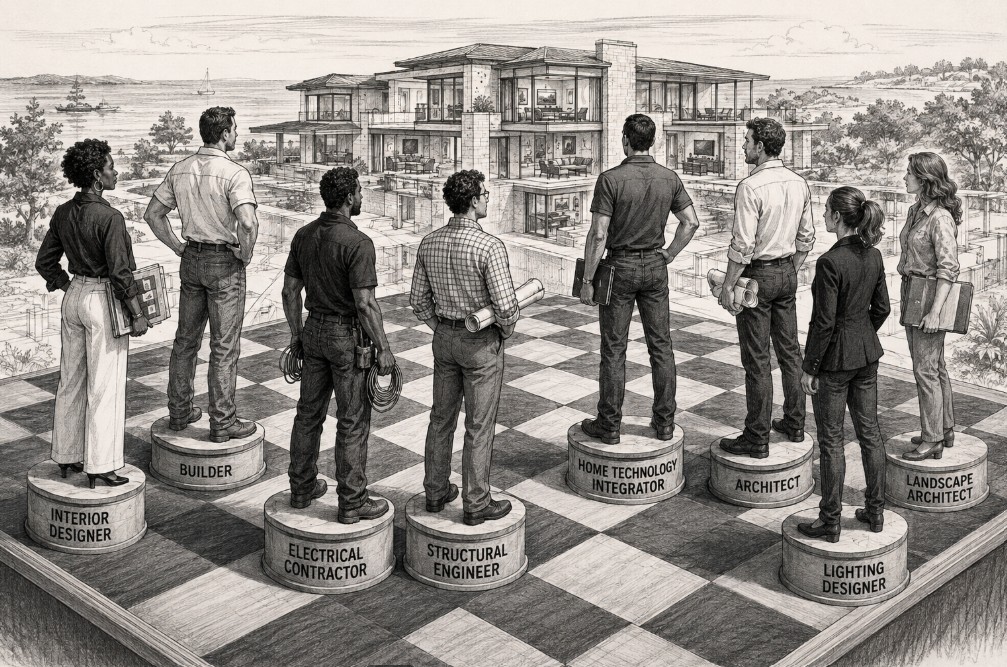
Architects, interior designers, and builders routinely recommend structural engineers, landscape architects, lighting designers, millwork, and other specialists based on experience and past performance. Yet many take a laissez-faire approach when it comes to selecting the home technology integrator, leaving the decision to the homeowner.
In today's luxury homes, where the integrator influences more than just TVs and speakers, that approach is worth reconsidering, as your reputation can be either bolstered or harmed by how the home’s technology systems are handled. As we discussed in our last blog, the integrator’s work affects ceiling plans, motorized shade pockets, display locations, equipment rooms, lighting control, networking, outdoor living spaces, and the overall coordination of technology throughout the home.
Poor decisions—or a lack of making any tech-related decisions—early on can affect aesthetics, construction coordination, system performance, and the homeowner's experience long after the project is complete. If you have a hands-off approach, the inexperienced homeowner may pick an integrator based on the lowest price—someone who is not design-centric and does not sweat the details. If you are making recommendations, your choice can positively or negatively affect how the homeowner perceives your work depending on how the project fails or succeeds.
Leaving technology decisions to the builder or homeowner does not shield architects, interior designers, or builders from the consequences. When technology planning is deferred, the resulting problems can reflect on the entire design and build team. Conflicts often emerge during construction: desired speaker or display locations collide with framing, motorized shade pockets or equipment spaces are overlooked, and electrical, ventilation, or wiring requirements are discovered after plans and bids are complete. Lack of technology consultation almost always leads to more visible wall controls (read: "wall acne") that could have been consolidated or cleverly hidden.
At that stage, the remedy is usually a costly change order, a project delay, or a compromise in aesthetics or performance. The homeowner may accept a relocated keypad, more visible devices to control their home, or a less capable solution to keep the project moving, but the disappointment can still damage the team’s reputation. A hands-off approach does not eliminate the risk. It simply pushes it downstream, where problems become more expensive, more disruptive, and more visible. Engaging a qualified technology integrator during schematic design helps protect the design intent and prevent these surprises. The HTA’s Project Technology Assessment Form makes it easy to begin that conversation before floor plans, framing, and infrastructure are locked in.
HTA believes that architects, interior designers, and builders should therefore not only have a strong say about who is ultimately hired for home technology, but should be extremely selective about the integrators they recommend.
Indeed, many experienced home technology integrators have noticed a similar pattern over the years. Architects, interior designers, and builders who once said, "We let the client pick whoever they want," are much more vocal after a project has gone sideways. After experiencing the havoc an unqualified integrator can cause, these frustrated design and build professionals are taking an active interest in which integrator their client selects. The HTA applauds these professionals, who have seen firsthand how much better the end result was when they recommended a proven pro integrator rather than the “AV Guy” with the cheapest price.
When a homeowner wants to compare options, provide a carefully considered shortlist of qualified integrators with comparable capabilities and project experience. Residential technology firms vary widely in their capabilities. Some provide design consultation during schematic design, produce detailed engineering and construction documentation, coordinate closely with architects, designers, and builders, commission completed systems, and provide responsive support after occupancy. Others primarily specify basic products, install equipment, and move on to the next project. The former is a partner from the beginning of the project and is around for the long haul with aftercare; the latter is a hired hand that arrives late to the party and ducks out when it comes to ongoing service.
Both types of integrators may appear similar to a homeowner during the proposal process. Additionally, 95% of the brands specified in a proposal are not household names, so it’s hard to compare differing proposals. The differences often reveal themselves during construction and after move-in. Spotting the difference and only recommending professional long-term home technology integration firms is important.
Evaluating Home Technology Integrators takes time, particularly for design and build professionals who do not work with technology professionals every day. That’s part of the reason we founded the Home Technology Association: to make this process easier. Read our article “The Easy Way to Find a Professional Home Technology Integrator” to learn how.
HTA Certified integrators have been independently vetted for technical competence, customer service, aftercare, and professional reputation. Each HTA Certified home technology integration firm’s profile identifies the services an integrator provides, including design consultation, engineering documentation, project budgets, project experience, certifications, and areas of specialization. We also designate each integrator as Foundation, Luxury, or Estate level. These classifications are designed to help you find the right fit for your project based on qualifications, complexity, and scale. This allows architects, interior designers, and builders to identify whose experience matches the type of homes they design, rather than relying solely on referrals or self-proclaimed professionalism.
Use your influence to help your client select a qualified, project-appropriate home technology integrator, and bring that firm into the process early. For architects and interior designers, that means during schematic design. For builders, it means before framing, electrical, and HVAC bids are obtained. The HTA Certified Integrator Directory provides a trusted place to start. Taking an active role helps protect the design intent, reduce avoidable changes and delays, and ensure the home technology experience reflects the quality of the entire project.
You Might Also Like: